Who Will be the only one
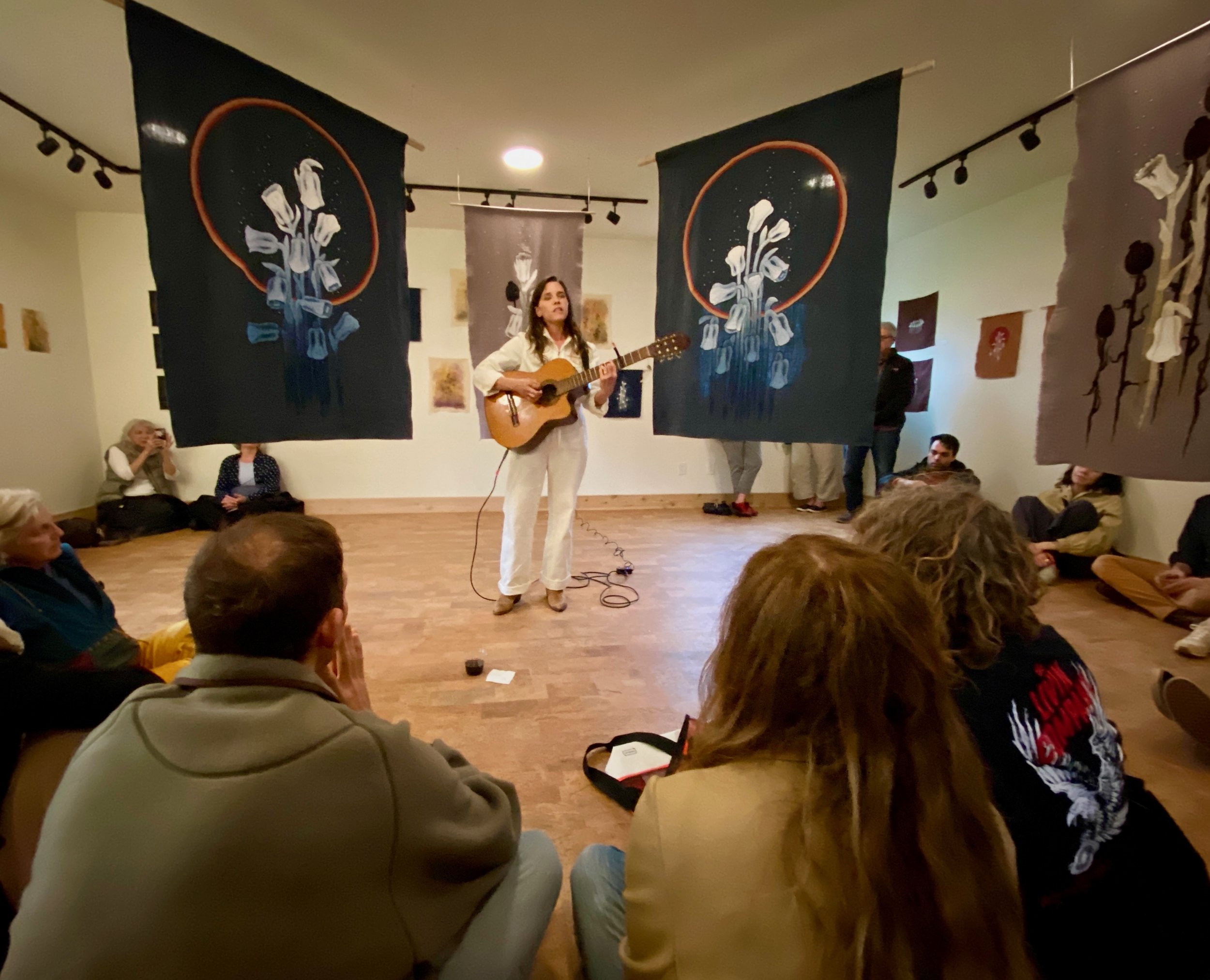
solo show . omena, michigan . 2025
Who Will Be The Only One
See Available Pieces and Inquire Here
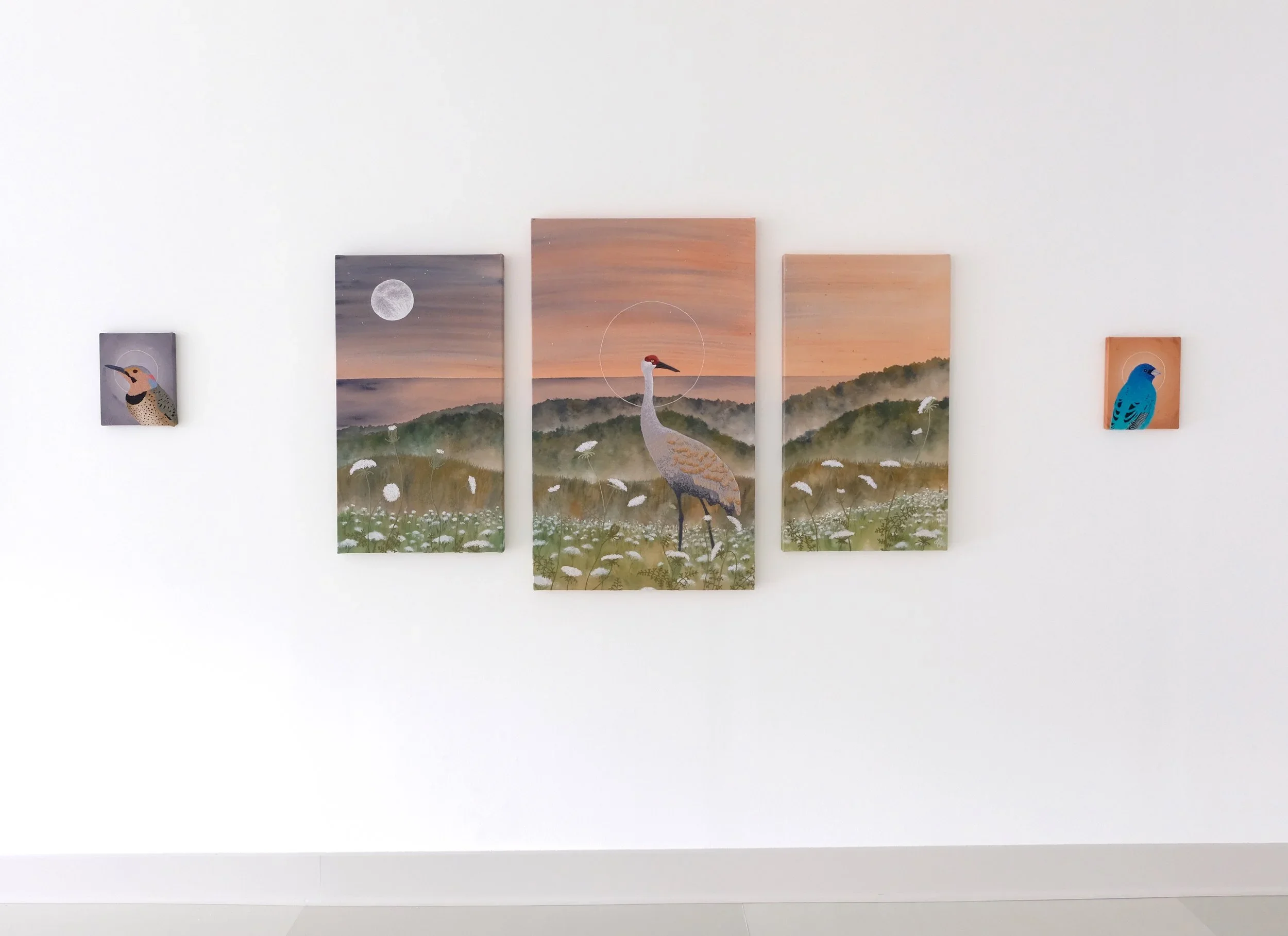
Just the other night Henry and I sat together watching the storm blow in from the big water: me on the dock, him on the old fallen Hemlock. We both raised our shoulders and got smaller as light rain began to fall and make a million tiny circles on the black pond surface. I swatted at bugs and sipped wine and crossed and uncrossed my legs and asked stupid questions, an ungainly and bumbling display. Henry sat unmoved and unbothered by any of it, ever the stately one.
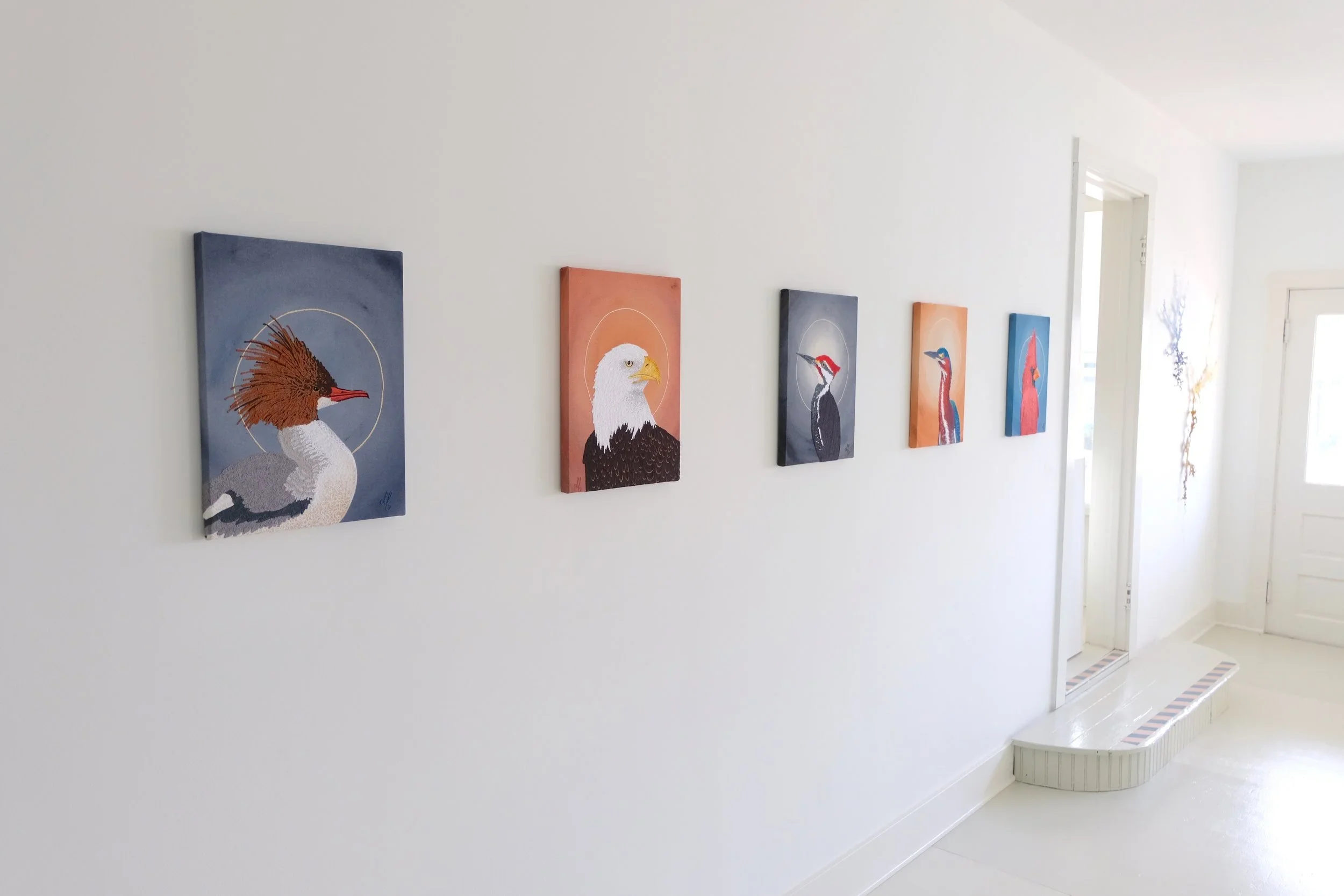
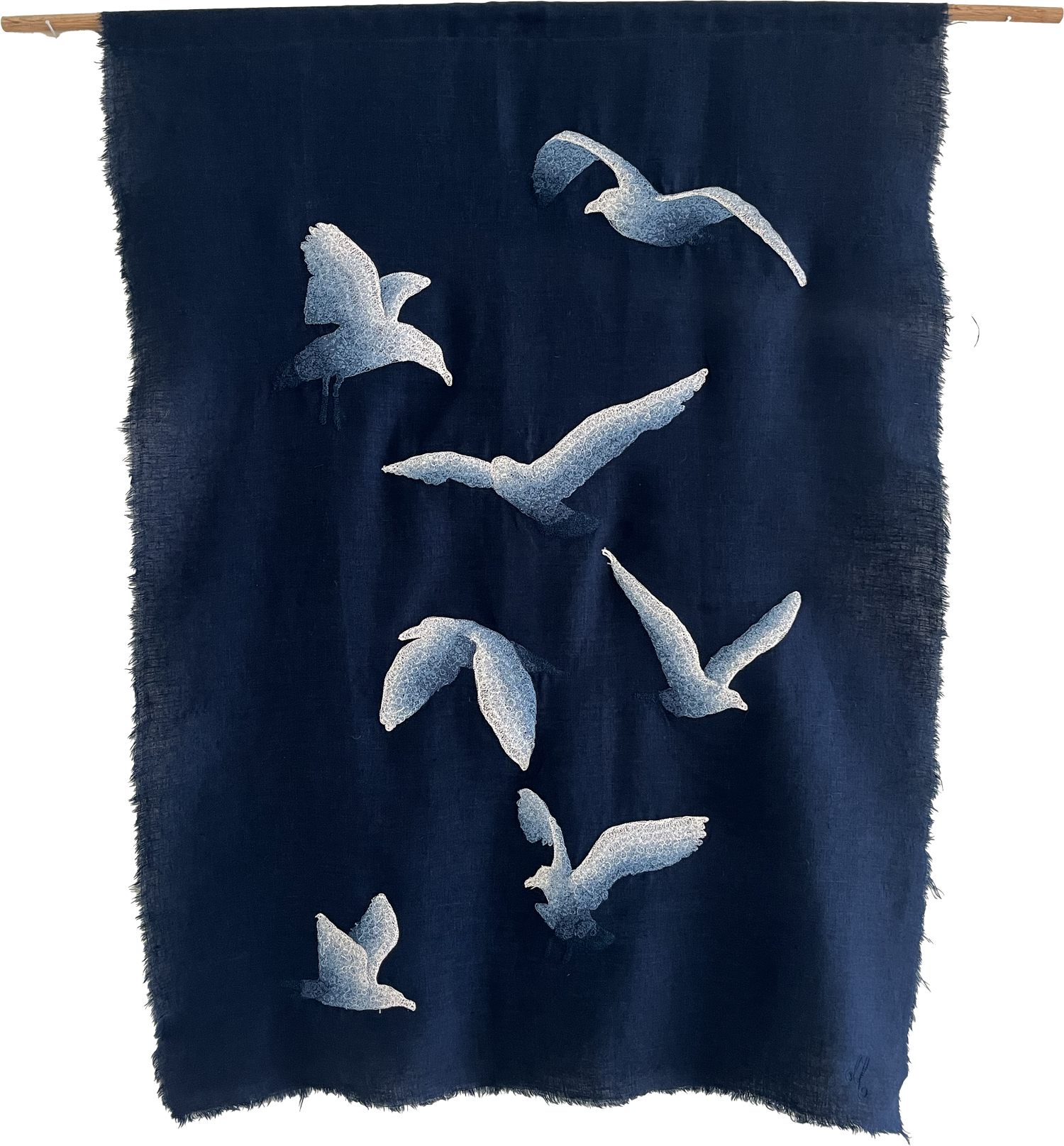
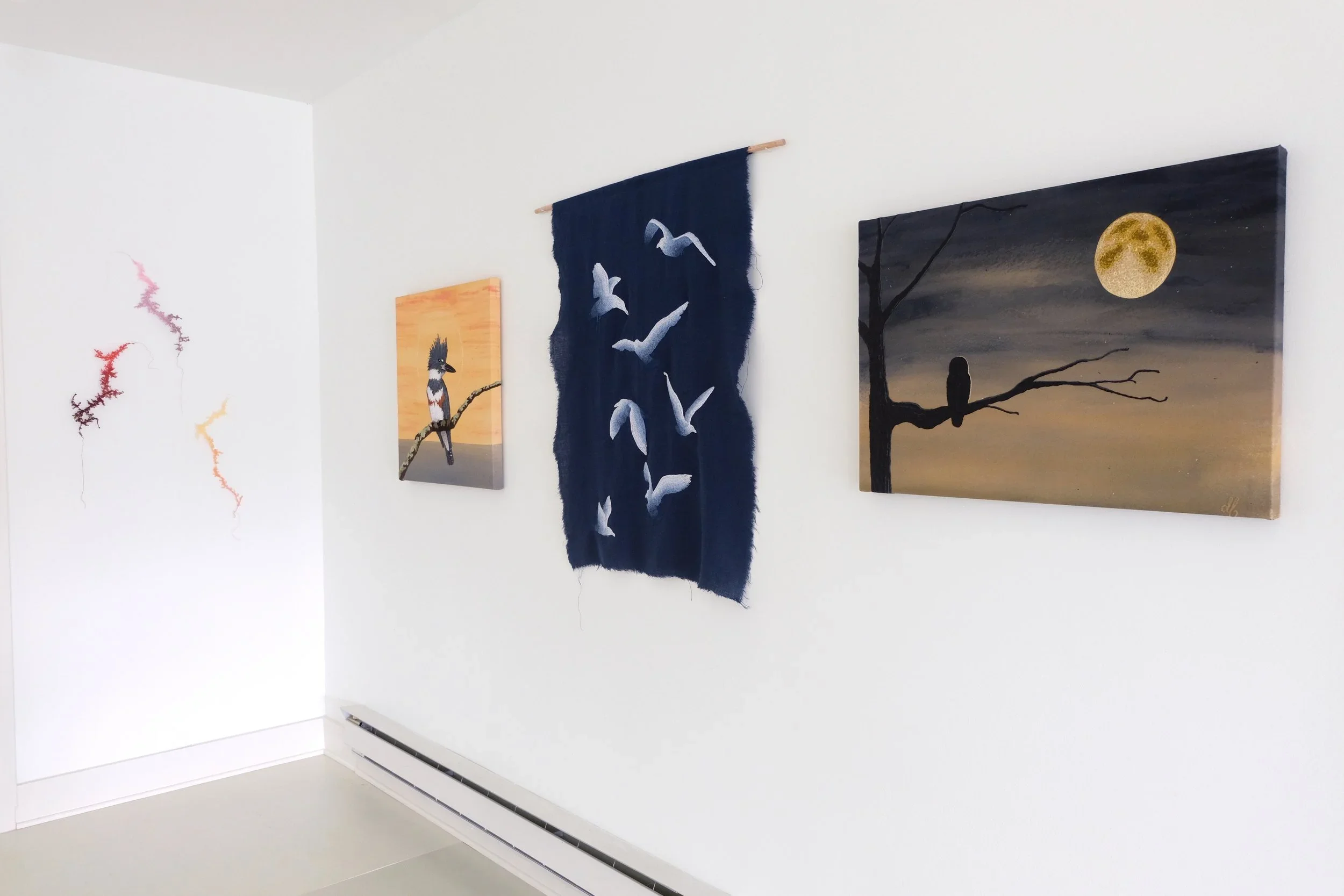
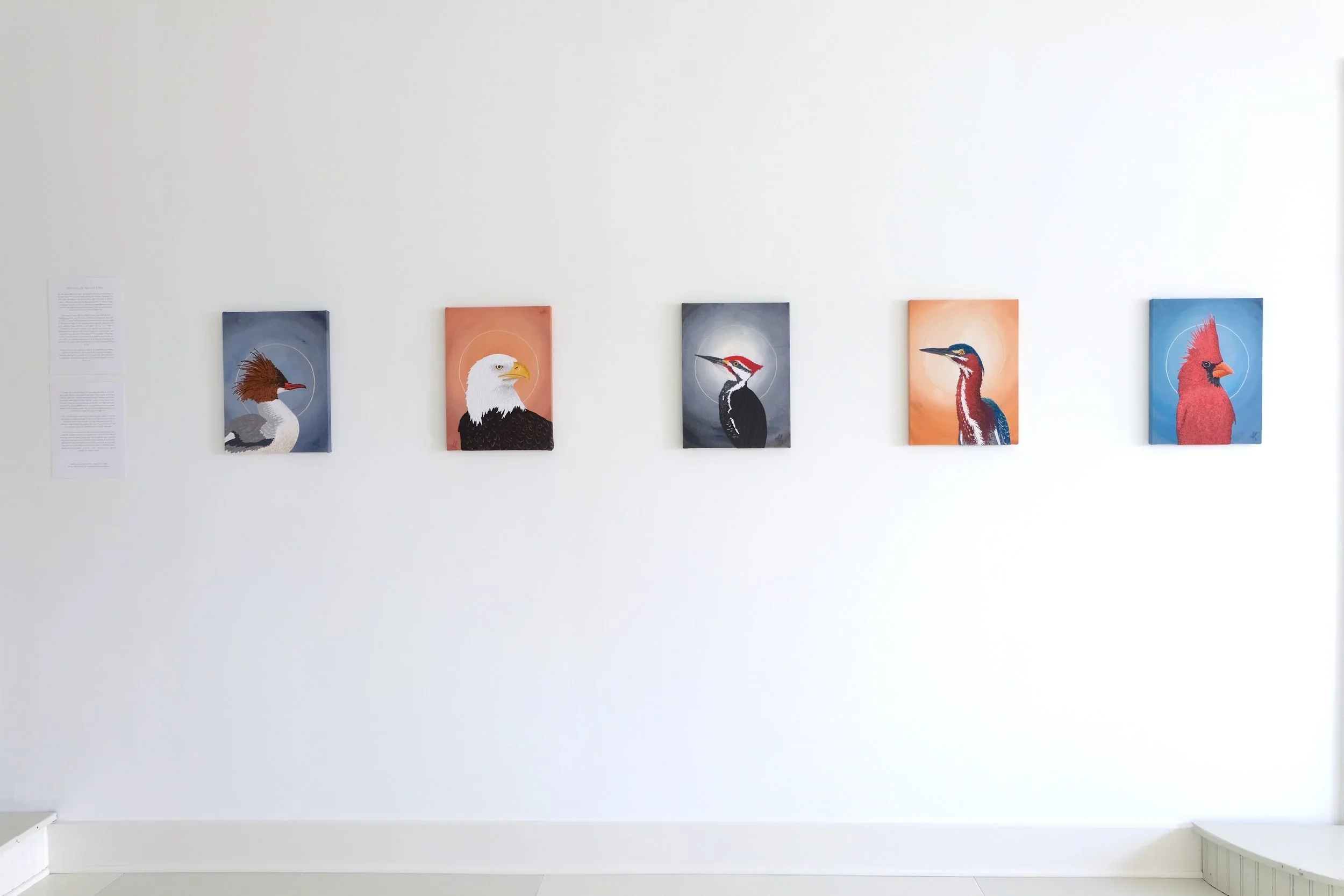
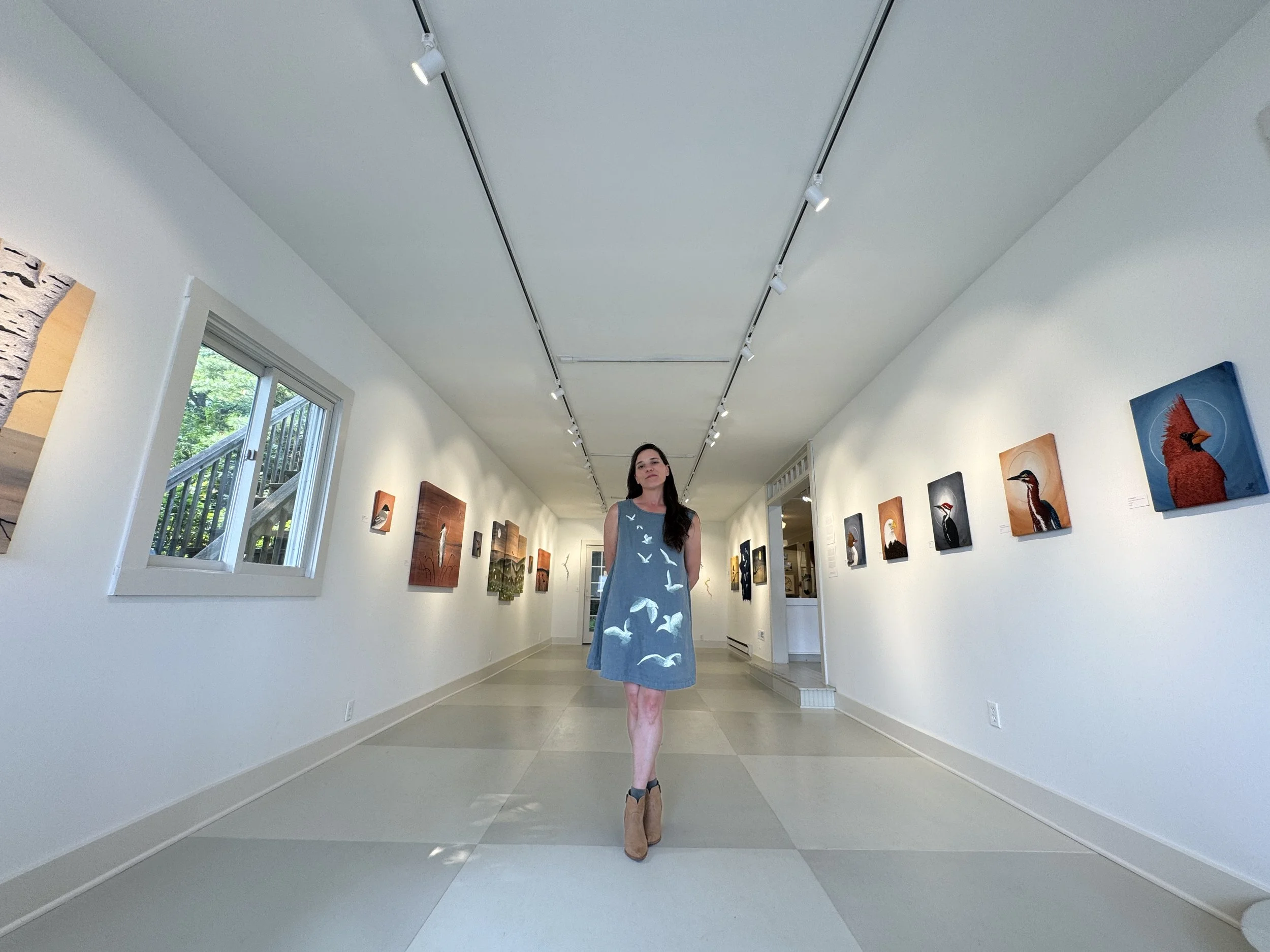
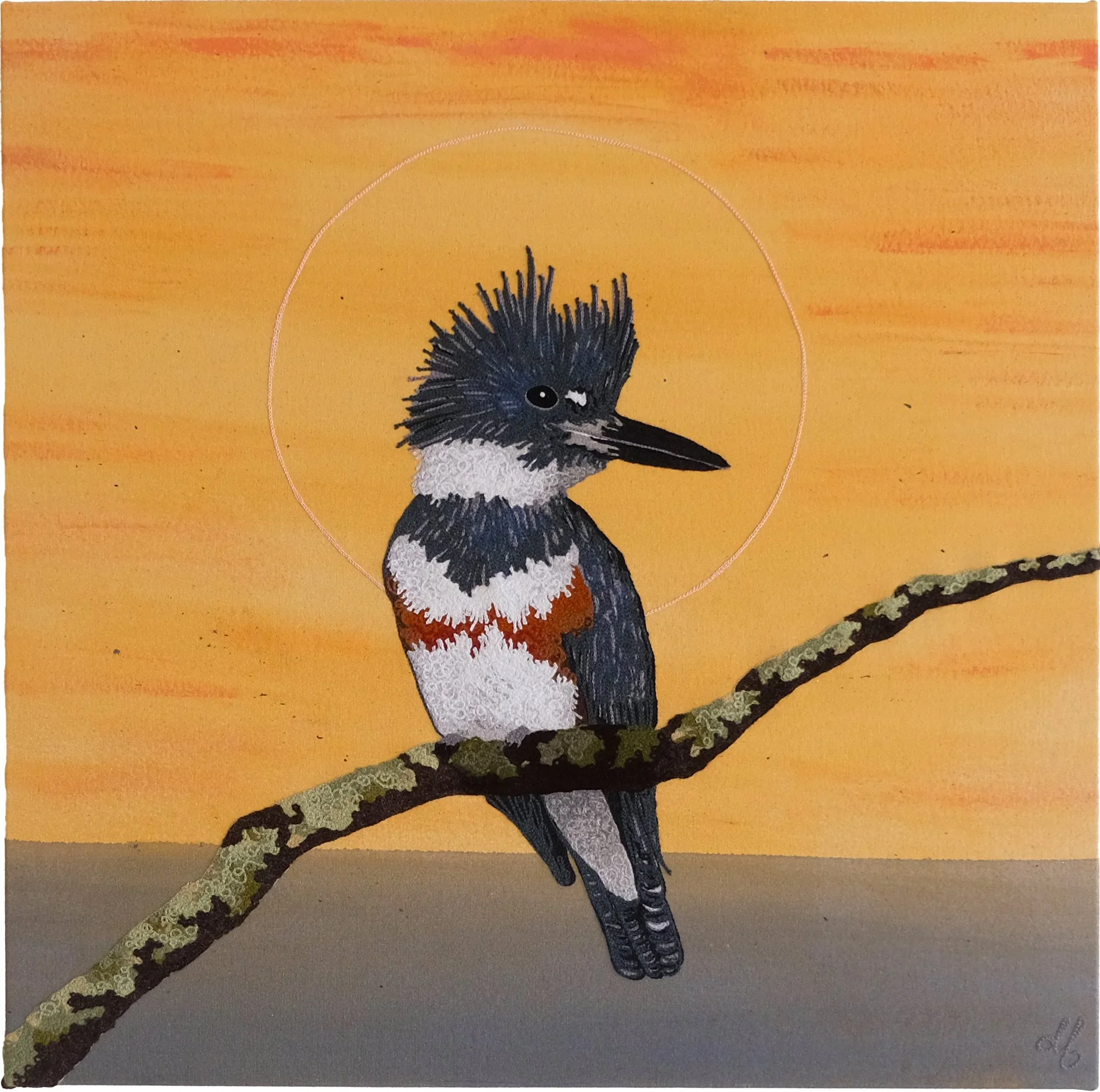
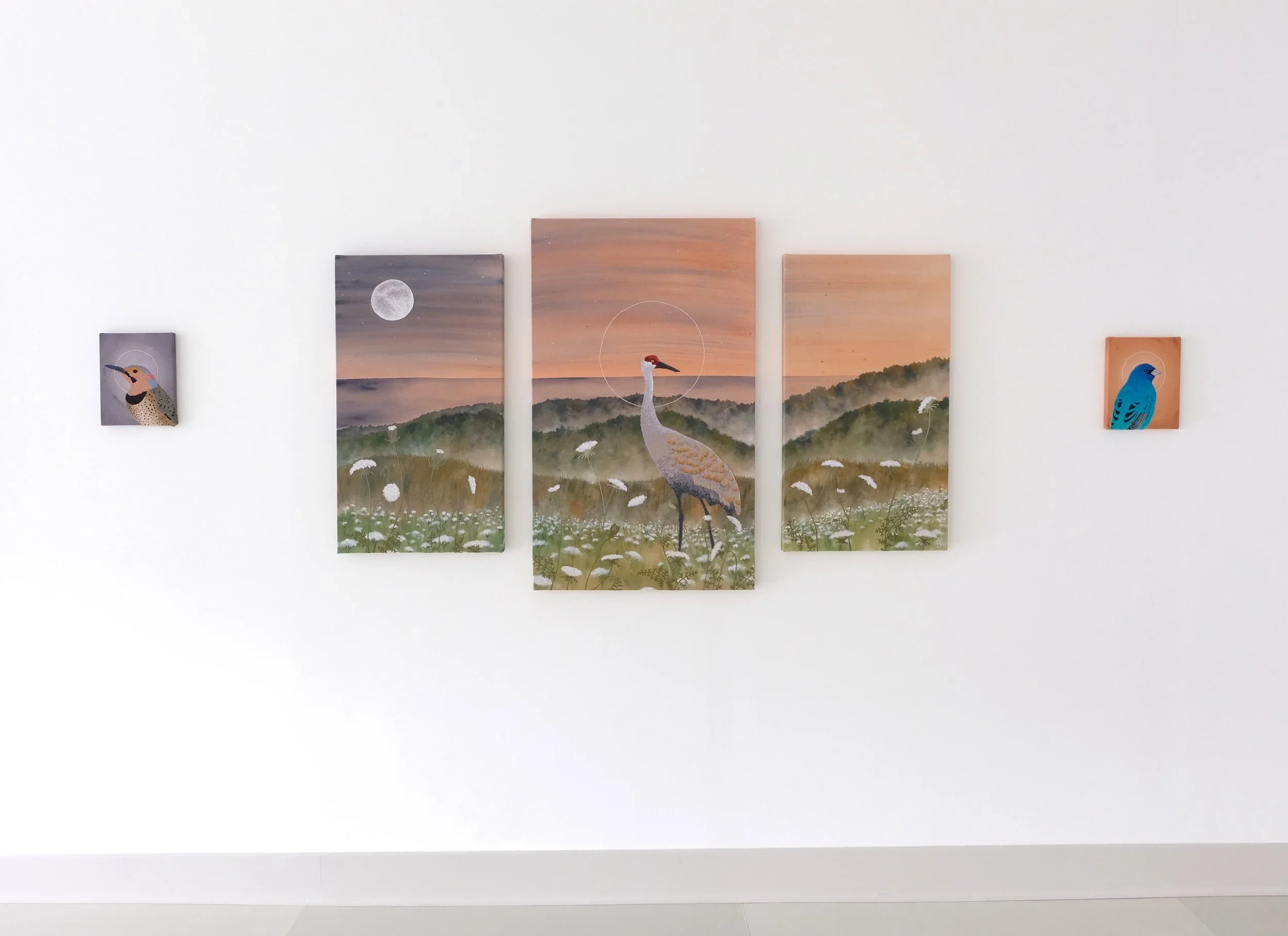
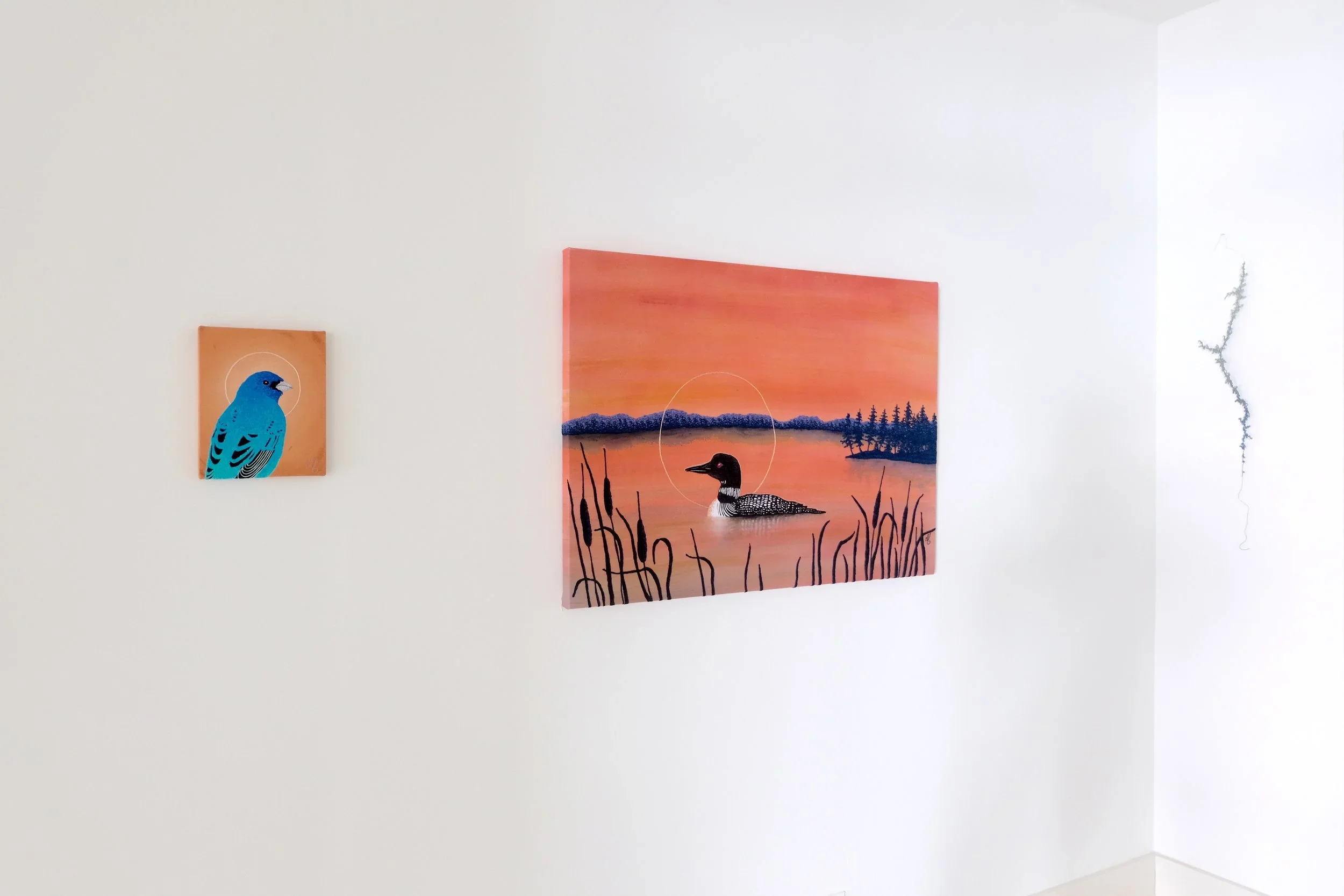
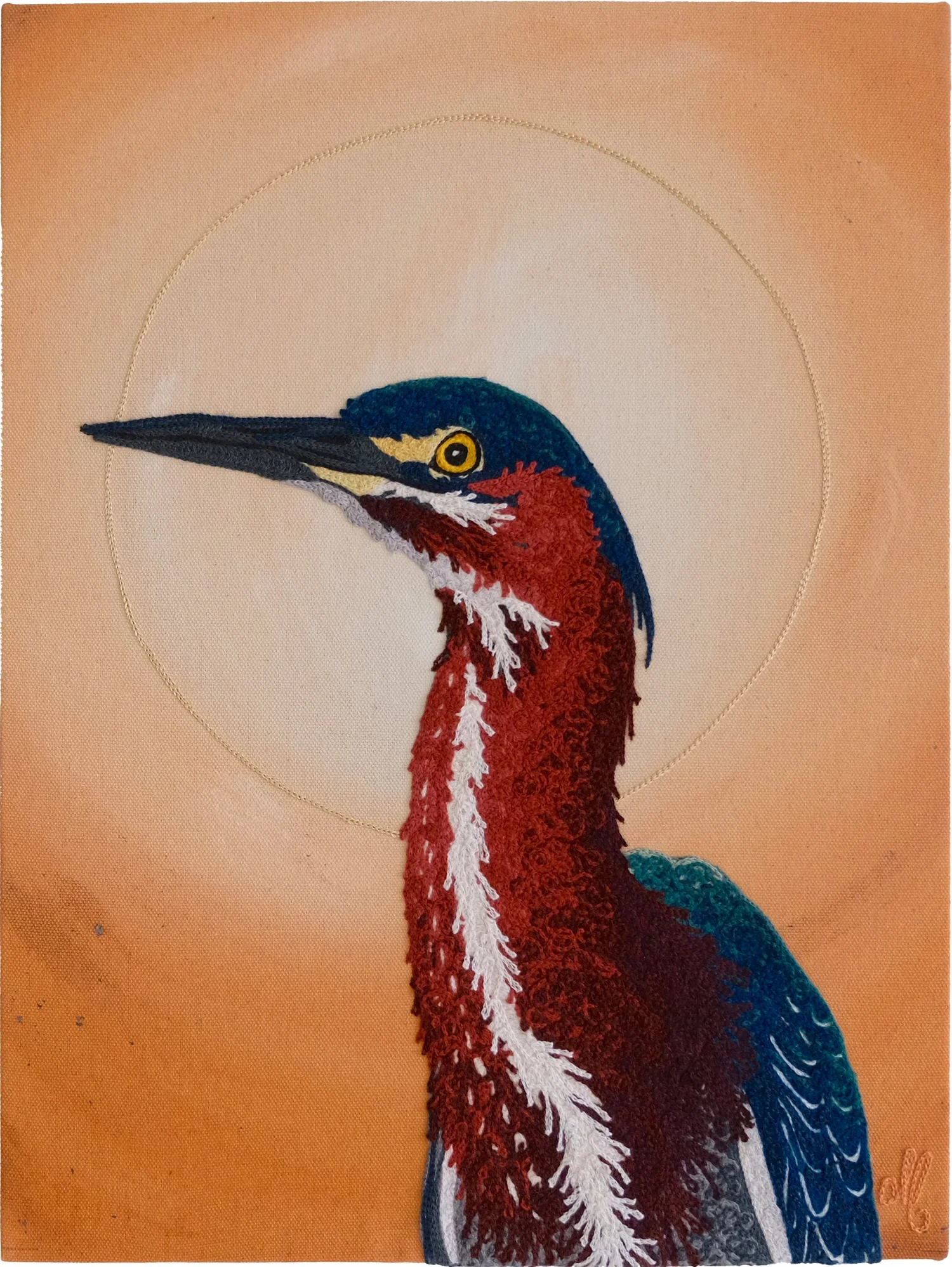
Every bird on these walls is a friend of mine. As a relatively new landowner in these northern woods, I have been learning the deep, full, and slow practice of making friends with individual birds. I say goodnight to Phoebe most nights in her snug little nest in the soffit. Rick and I are always arguing (I mean obviously, look at him). Giiwedin came to me in a blizzard on my birthday, soared a circle over the pond before she disappeared back into the wild white sky. Sega and I watched each other quietly all winter last year. Peter jumps around the pond chasing frogs while I water my garden. Karen bosses me around but is pretty fun to have coffee with. Getting acquainted with these birds and watching them accept me as a part of their home has been one of the greatest honors of my life.
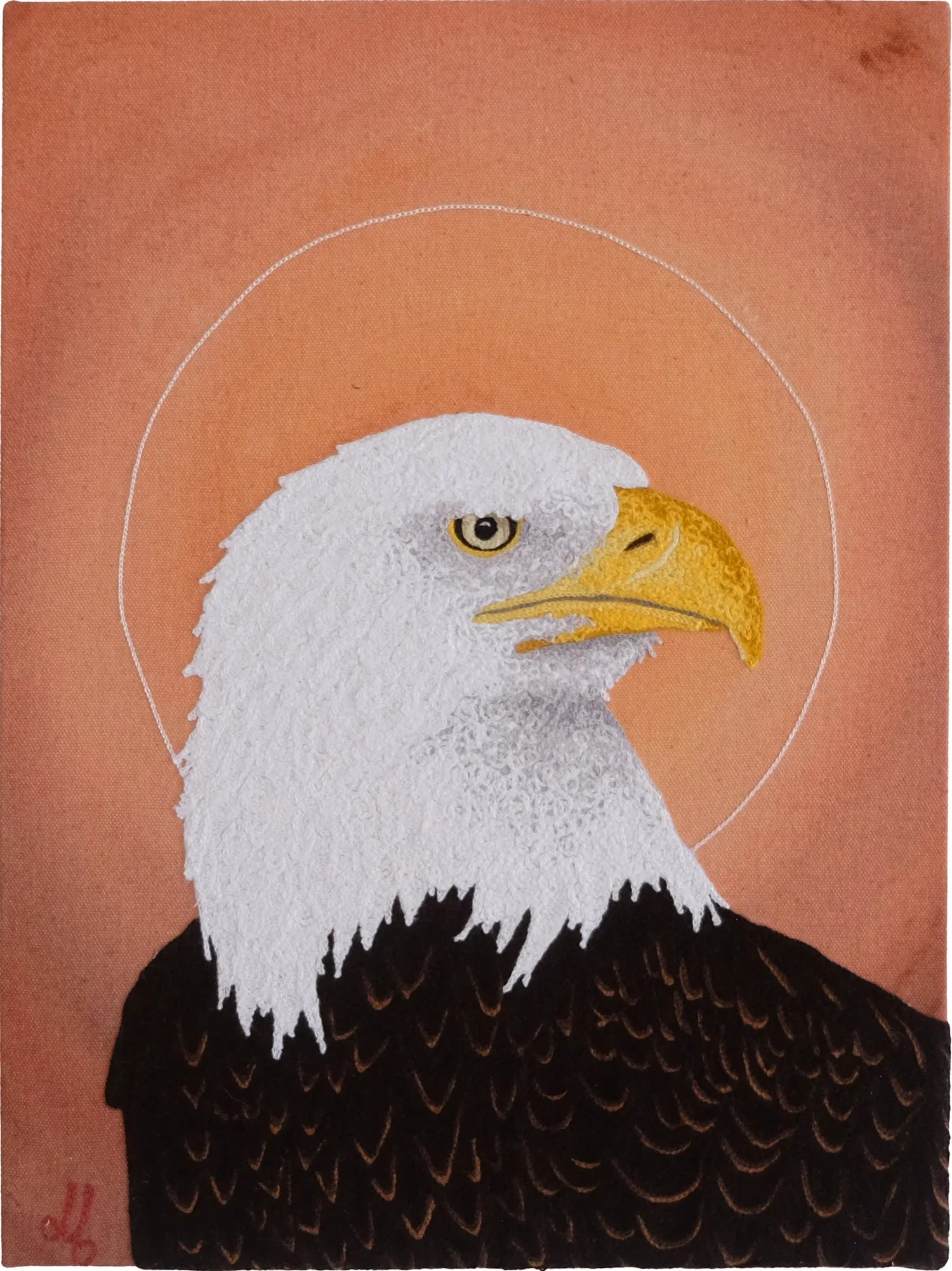
On the one hand, this collection of work is my attempt to exalt, revere, and honor these friends. Look at you, Emily, queen of the fields! Charlotte, thank god for your wild ways! I hope to treat these birds as we do presidents and saints, with portraits and prominent spaces on well-lit white walls.
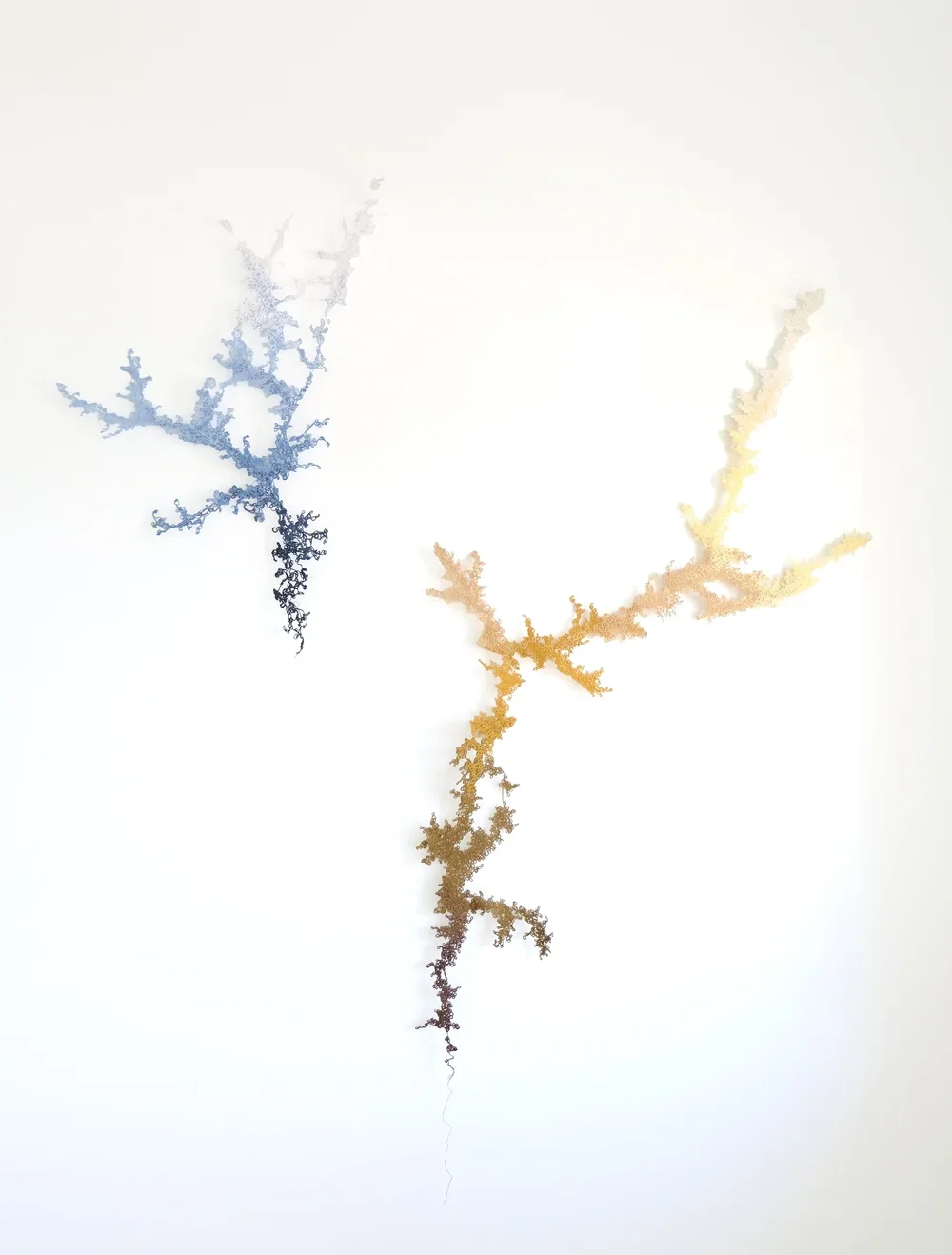
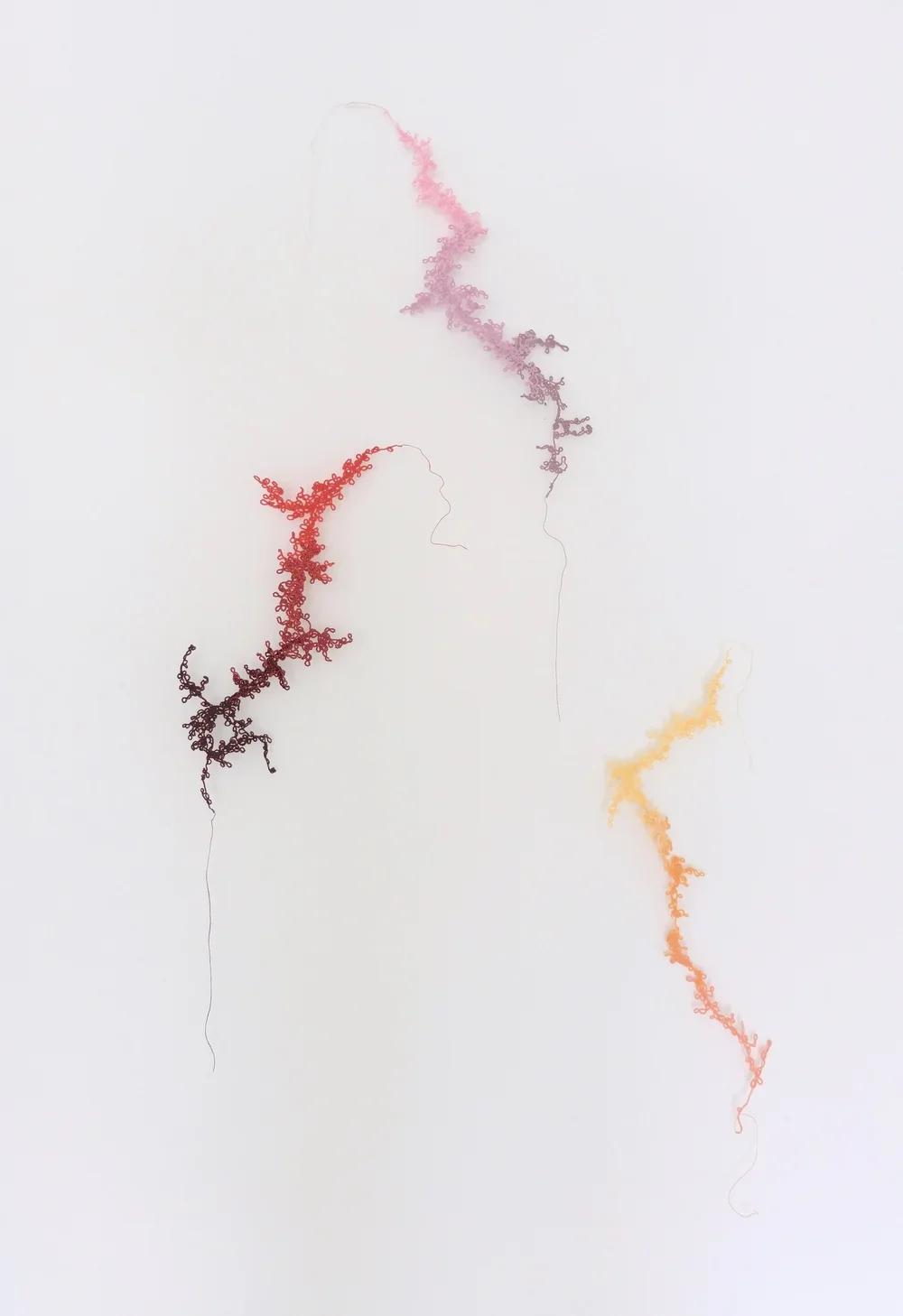
Of course, our world is changing. We are losing our birds at terrifying rates. Every fall when these friends head south I find myself wondering if I will see them again. As our skyscrapers and light pollution and habitat destruction make migration more difficult, I worry. Is your winter home still there, Tim? Can you find your way back? Has your flight path gone haywire? The abstract pieces here are an exploration of these questions inspired by live migration maps, each one with one beginning thread and one end thread to signify the path of a single bird.
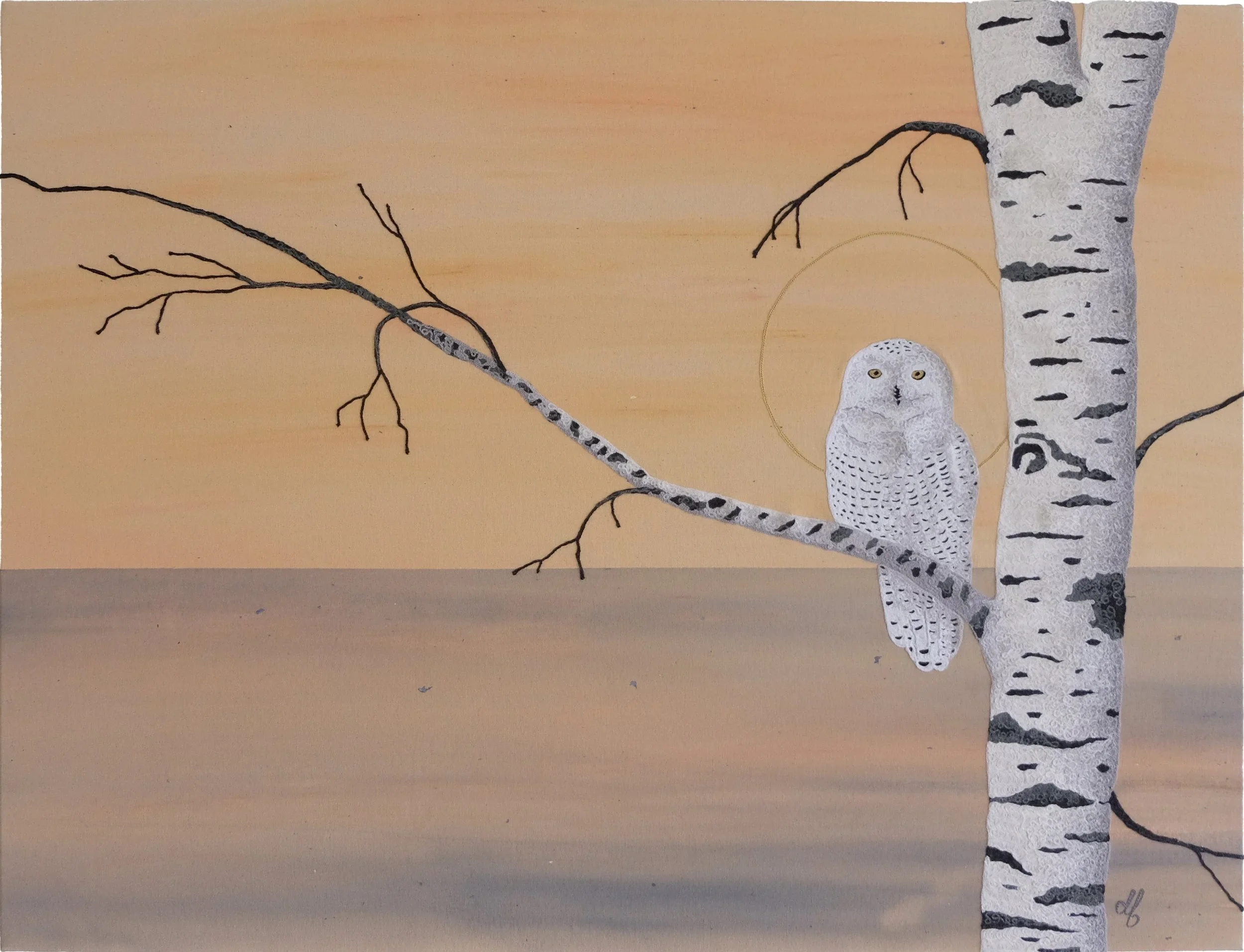
While I celebrate these magnificent creatures for their majesty, I also feel their decline as a deep, deep grief. So the work displayed here is also my attempt to wrestle with this truth. One day, there may be one last individual indigo bunting. One solitary loon left. What if it is Gwen? Will you be the last snowy owl, Annika? Who will be the only one?
Now don’t get me wrong, Henry has his moments, too. I’ve seen him crash into countless trees, land on branches he’s much too heavy for and freak out when they break beneath him, and completely miss a landing in the pond, swimming back to shore like lowly waterfowl. It would be my greatest joy if you could stand in front of him, here, and see, know him, love him for his funny, stoic, dramatic, fierce, vulnerable, clumsy, delicate self. He is indeed a president, a saint, a grump, a seer, a spirit, a trickster, an omen, a friend.

We Can Look For Small Portals
solo show . marfa texas . 2025
We Can Look For Small Portals
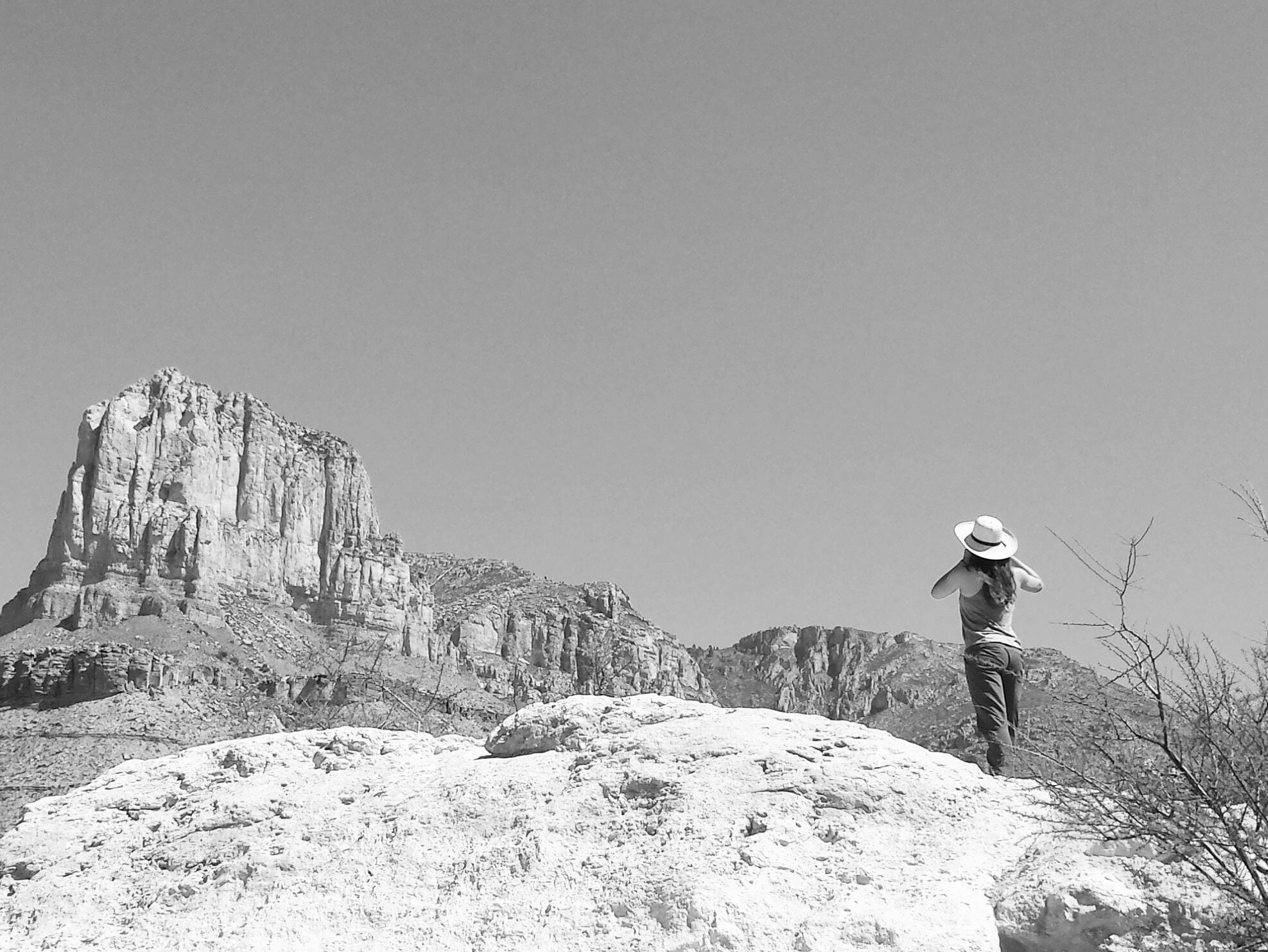
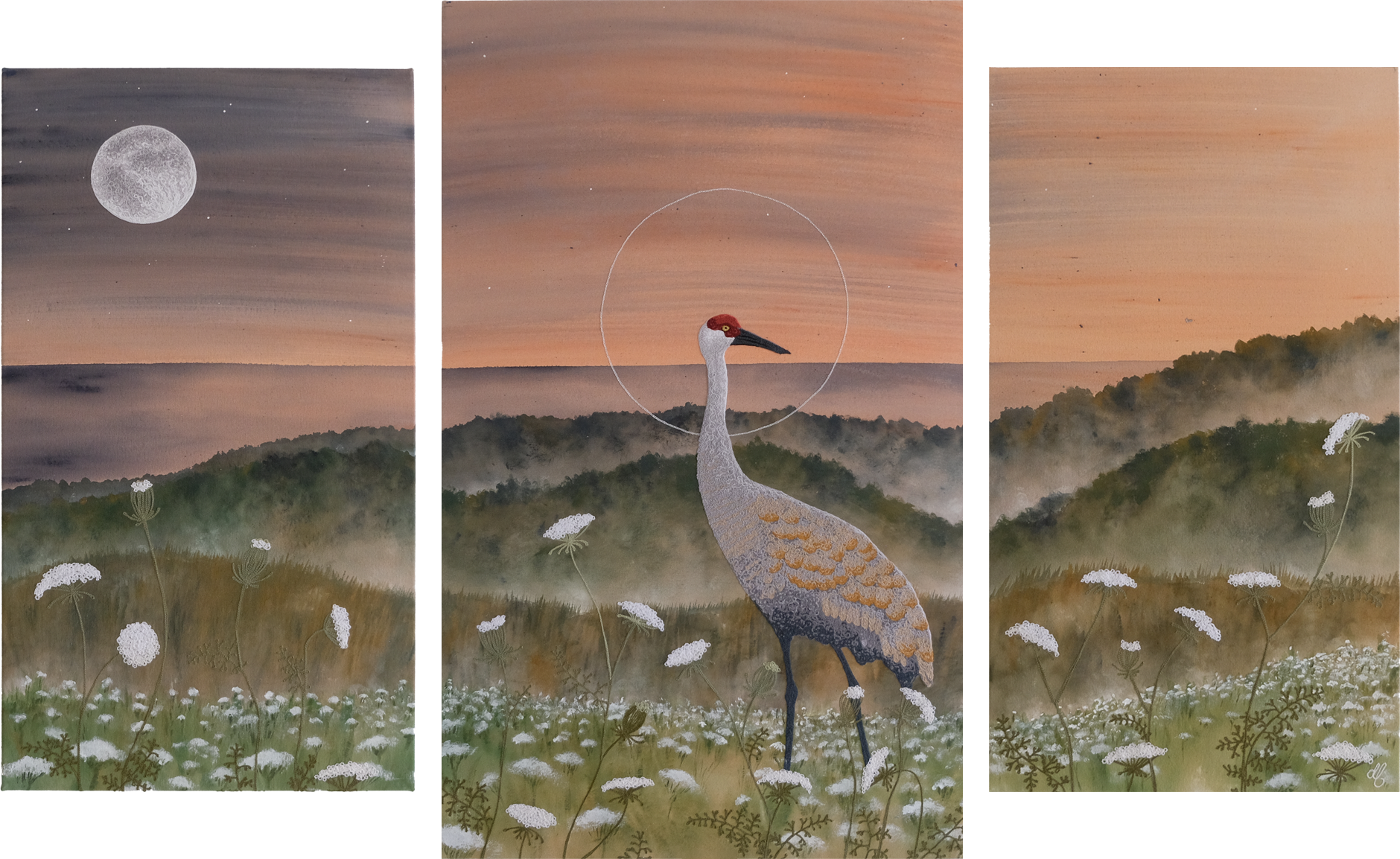
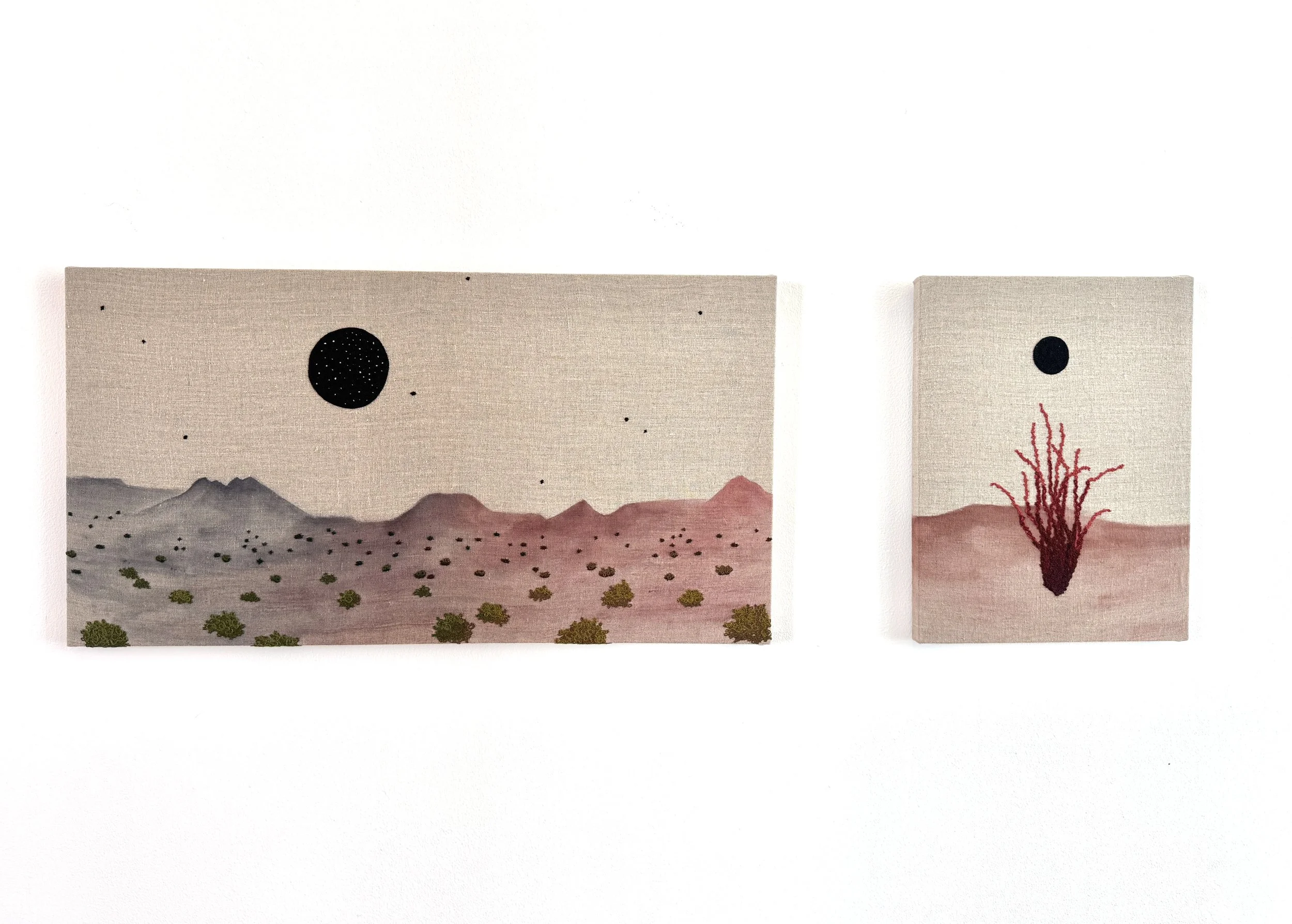
Landscapes can hold it all, I think. Mountains and plant life, sure, but also memories, dreams, wishes, and grief. I’ve been chasing the wonders of the West Texas landscape through various artistic mediums since my first trip out here many years ago. Like so many artists before me I have been swept out of my boots by the dusty-yet-brilliant hues, the ever wistful skies, the unearthly cactus hanging from the side of the lonely canyon. These landscapes just beg us for the canvas, it seems.
After losing my mother-in-law (the inimitable Patty Manning, native plant queen of West Texas) last year, these desert scenes suddenly felt different: cavernous, unfamiliar, and fundamentally unknowable. I felt entirely confounded by them. How could I possibly portray the desert now, as I have for years, when there was such a giant hole in the middle of it? I wrestled with it, I avoided it, I tried many failed attempts at it. Eventually, though, I settled on it: portray the giant hole.
And so these paintings and stitchings became a way for me to move through my grief. The giant hole became a portal, a small way to find what I had lost. The landscapes became bigger than their immediate scenes, my grief began to encompass more than just my own loss. The portals became perhaps more of a collective concept, allowing us access to that which eludes us. What can we do when the world around us becomes changed and unknowable? We can look for small portals.




Monotropa Uniflora
solo show . Cedar MI . 2022
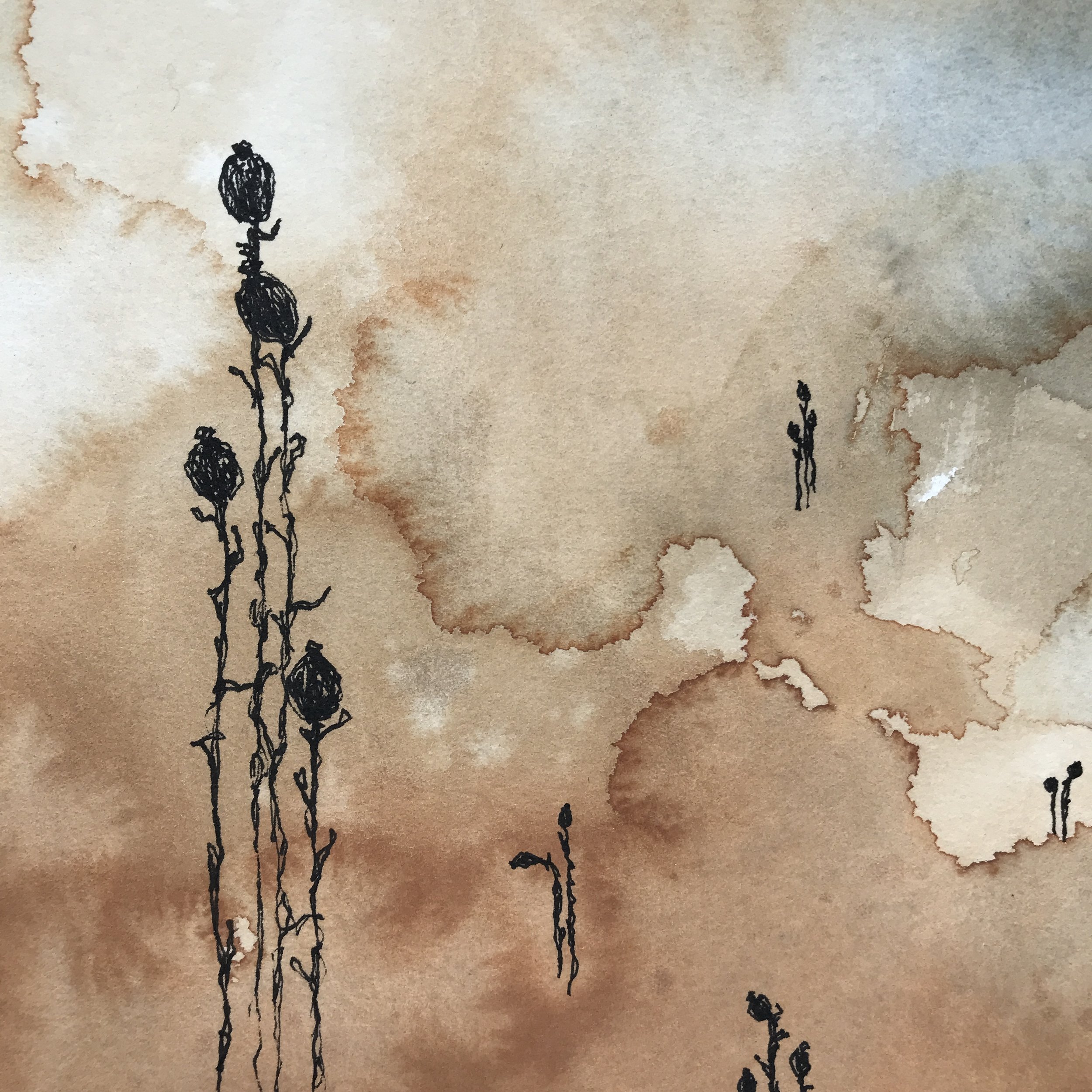
The Ghost Pipe is a highly medicinal plant, often used for helping with epilepsy and PTSD, and also helpful in times of transition or great loss; it is a healer. It is indeed a flower, though it lacks chlorophyll and instead draws its nutrients from the roots of trees and the fungi between them without starving either; it is a secret and determined survivor. It pushes its shoulders through the forest decay after the rains to stand strong with frail petals among the pines; it is a proud and humble warrior. I began my attempts at capturing the Ghost Pipe years ago, focusing on its frail translucence and pale glow. I have used all mediums available to me (linocut, painting, chainstitch embroidery) to portray its visionary essence. When I was diagnosed with breast cancer in June of 2022, it was no surprise to me that I turned again to this healer, this survivor, this warrior. What came pouring out of me now though, instead of the white and glowing portrayals of the Ghost Pipe in its prime, was the autumnal version of the flower. In the fall as the Ghost Pipe dies, its luminescent body furls and browns, becoming a hardened and shriveled stalk. Throughout my cancer treatment I found myself leaning heavily on this form of the Ghost Pipe.
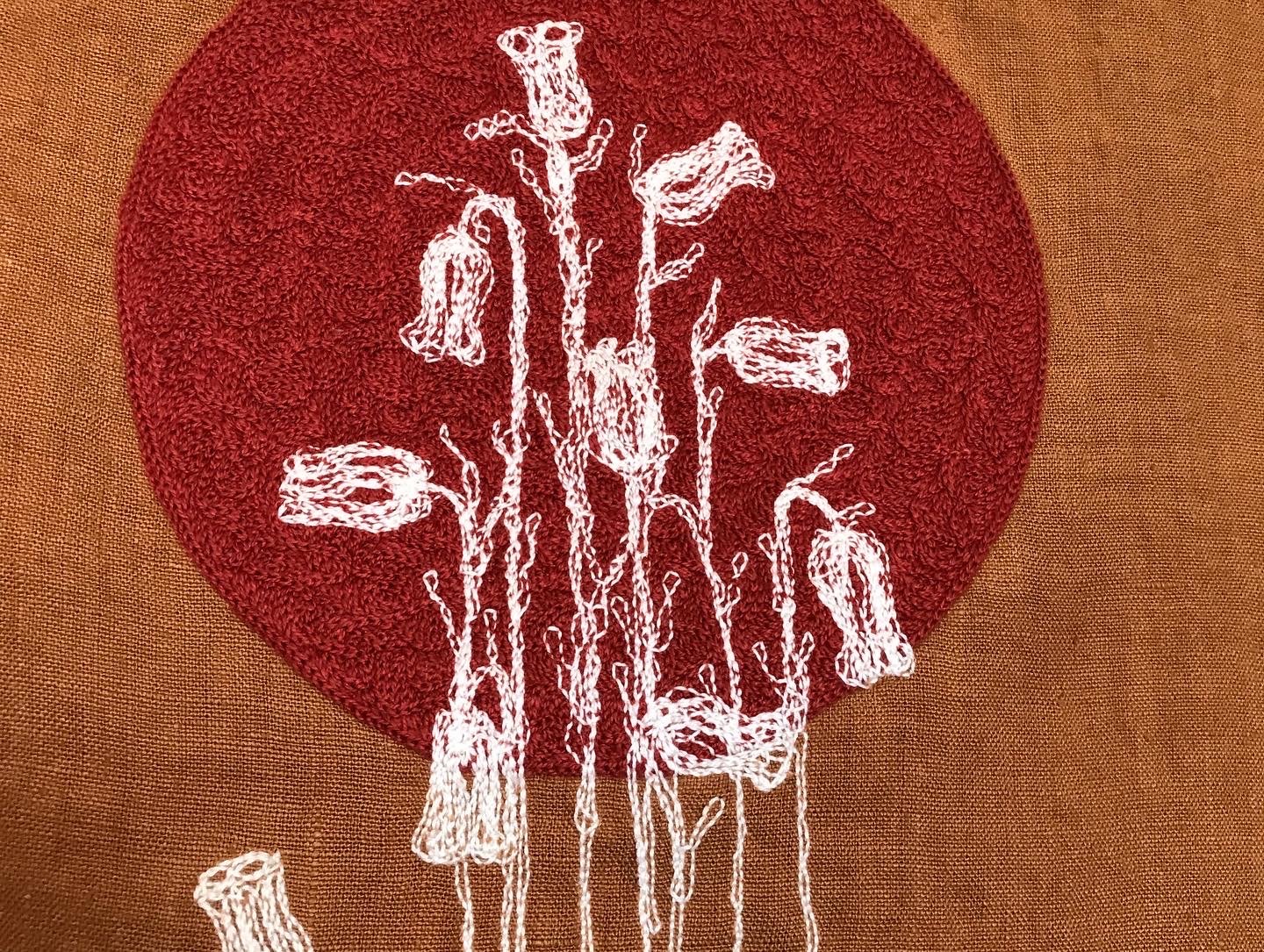

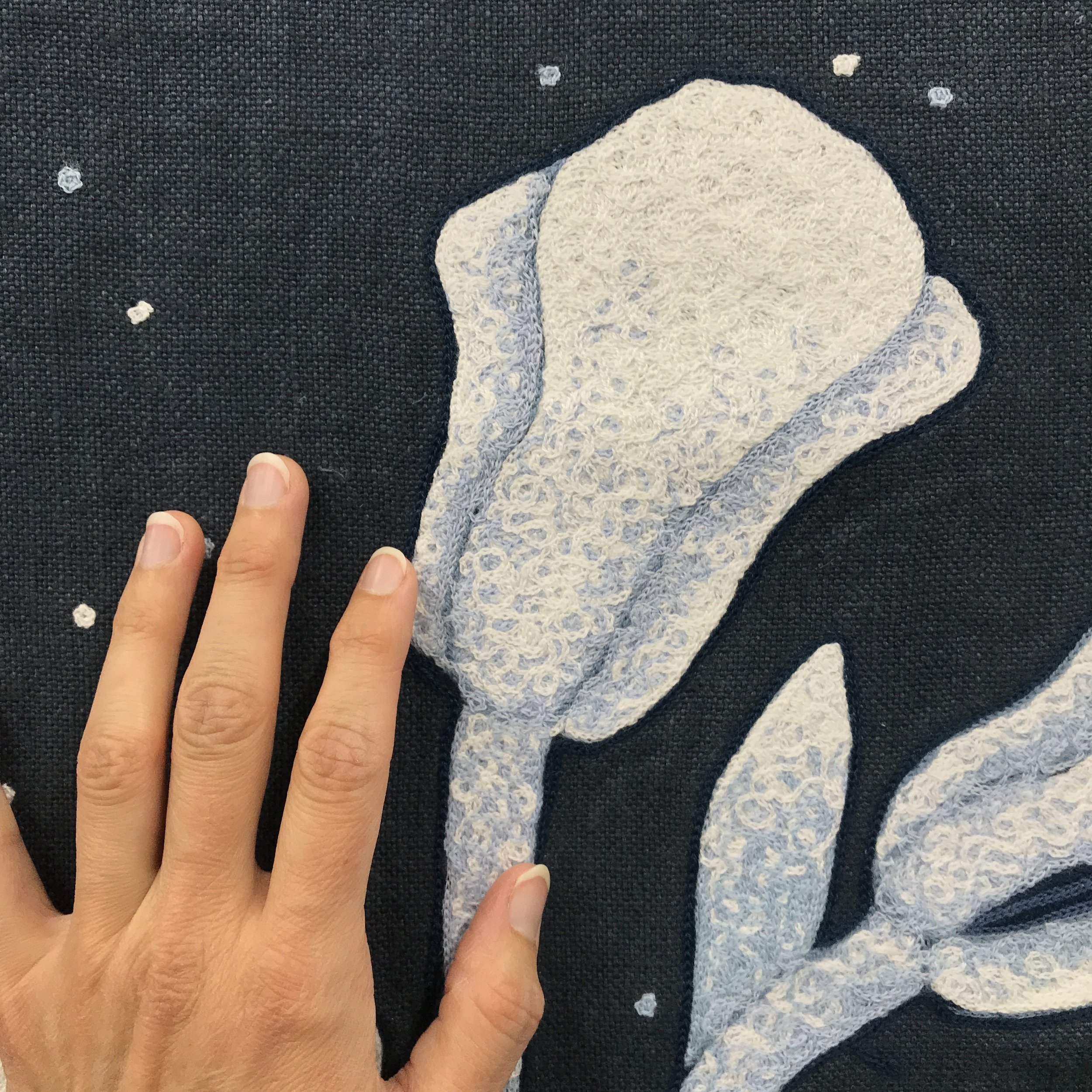
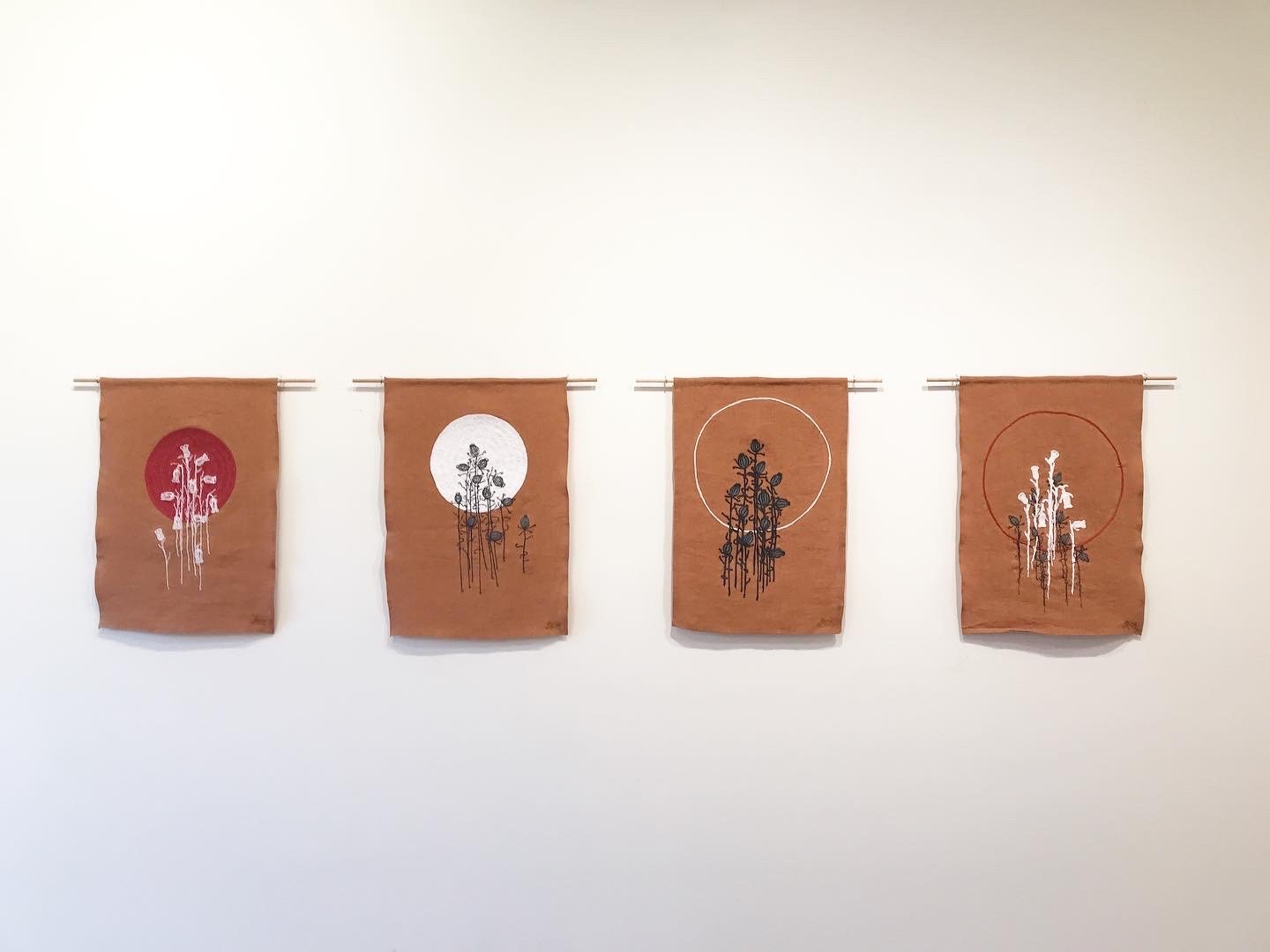
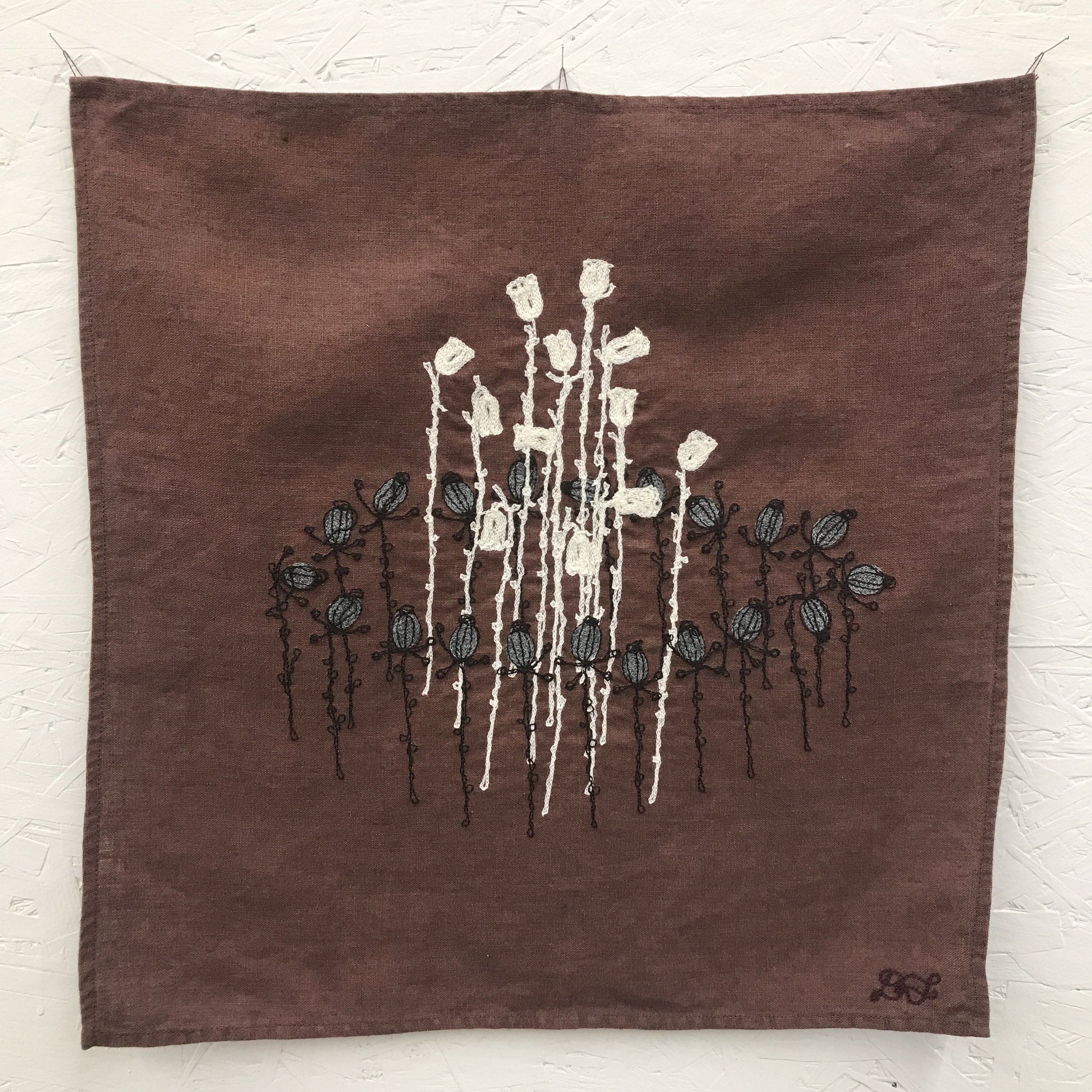
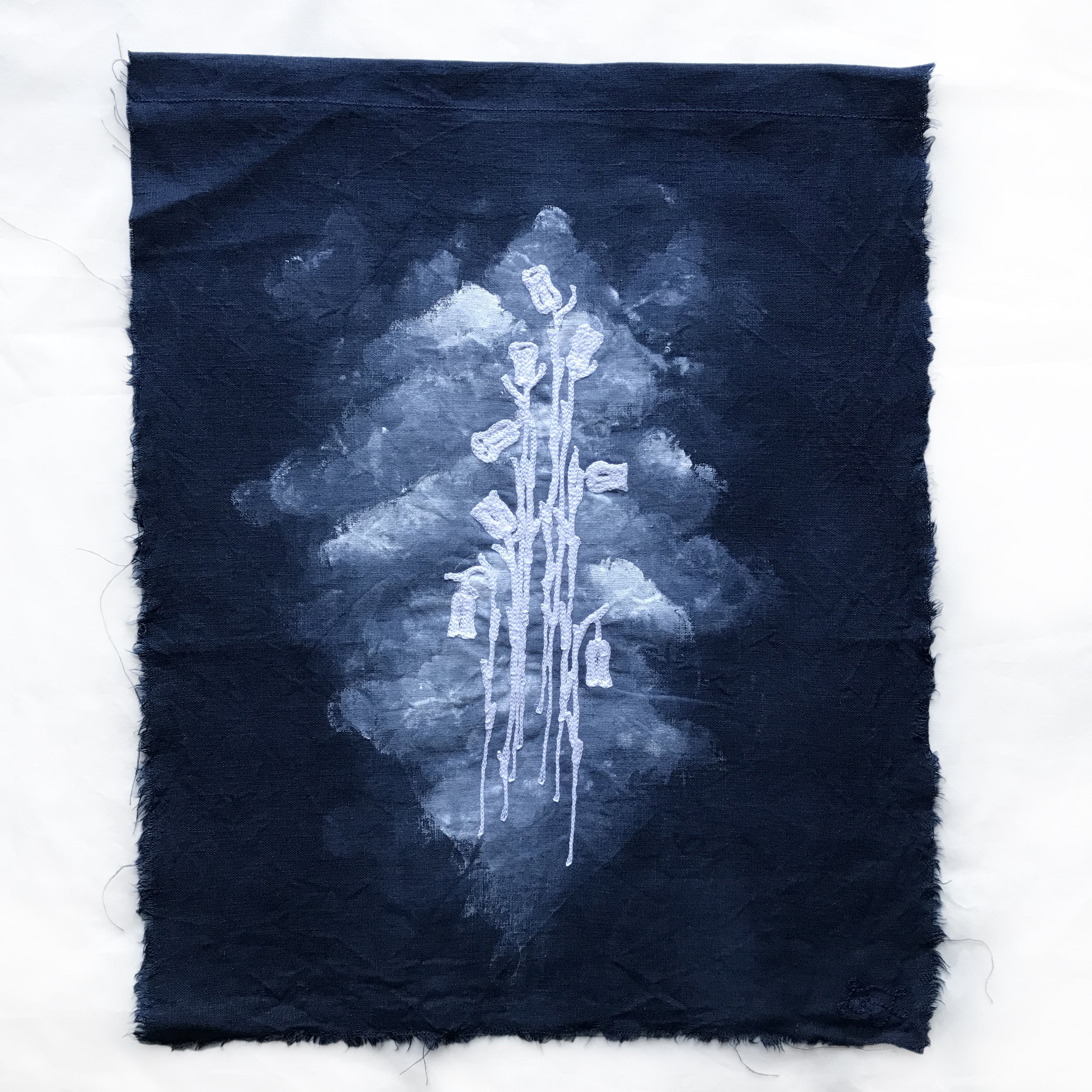
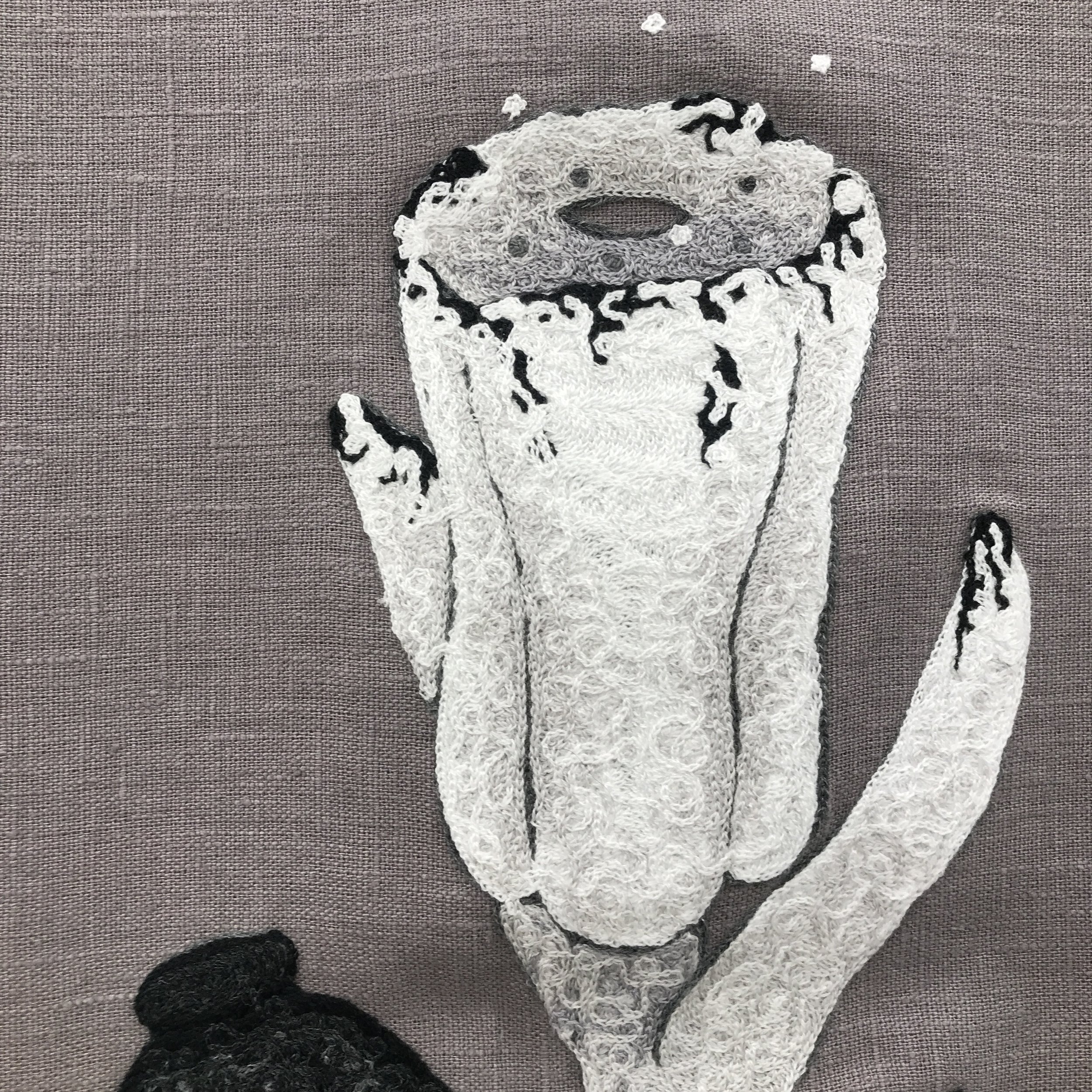

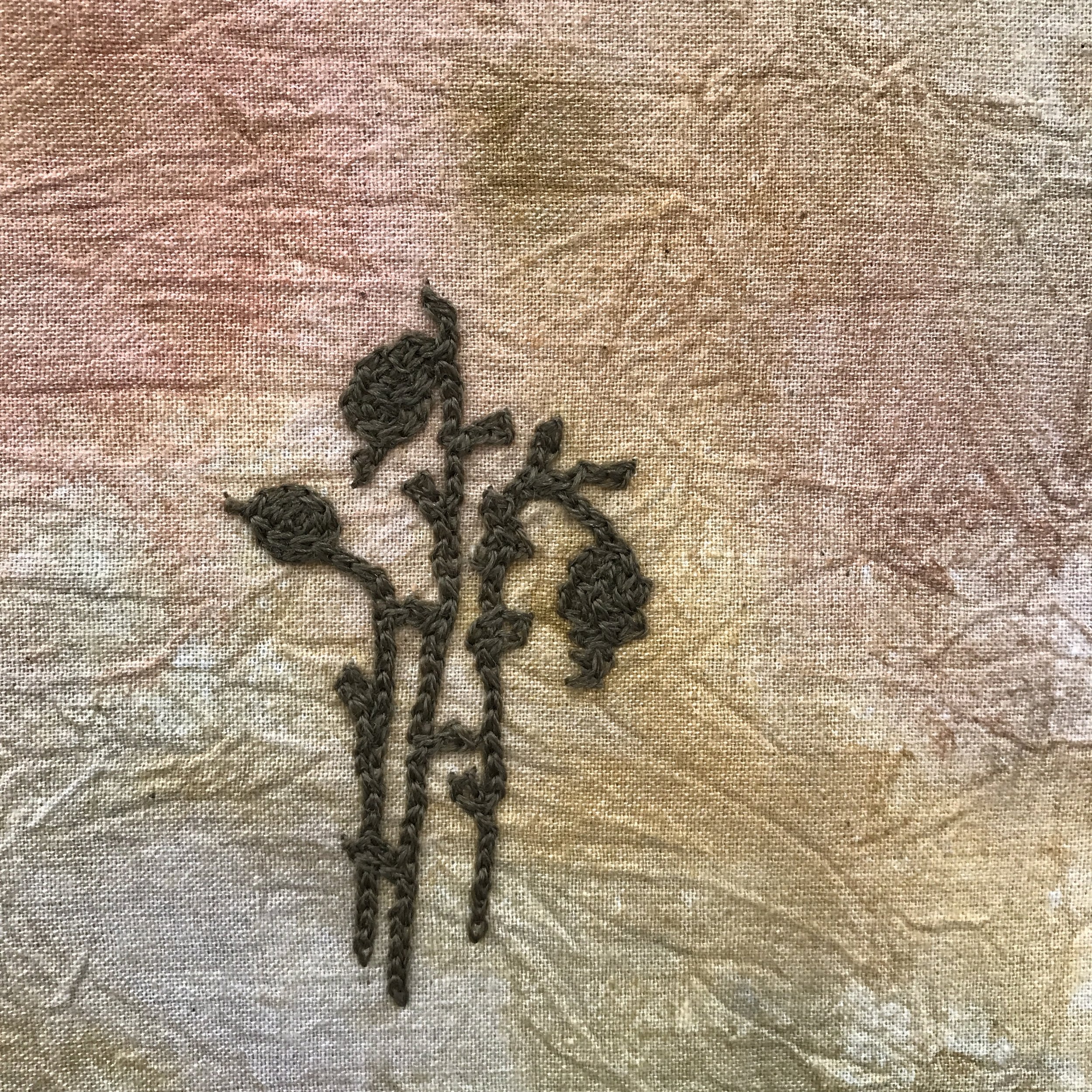
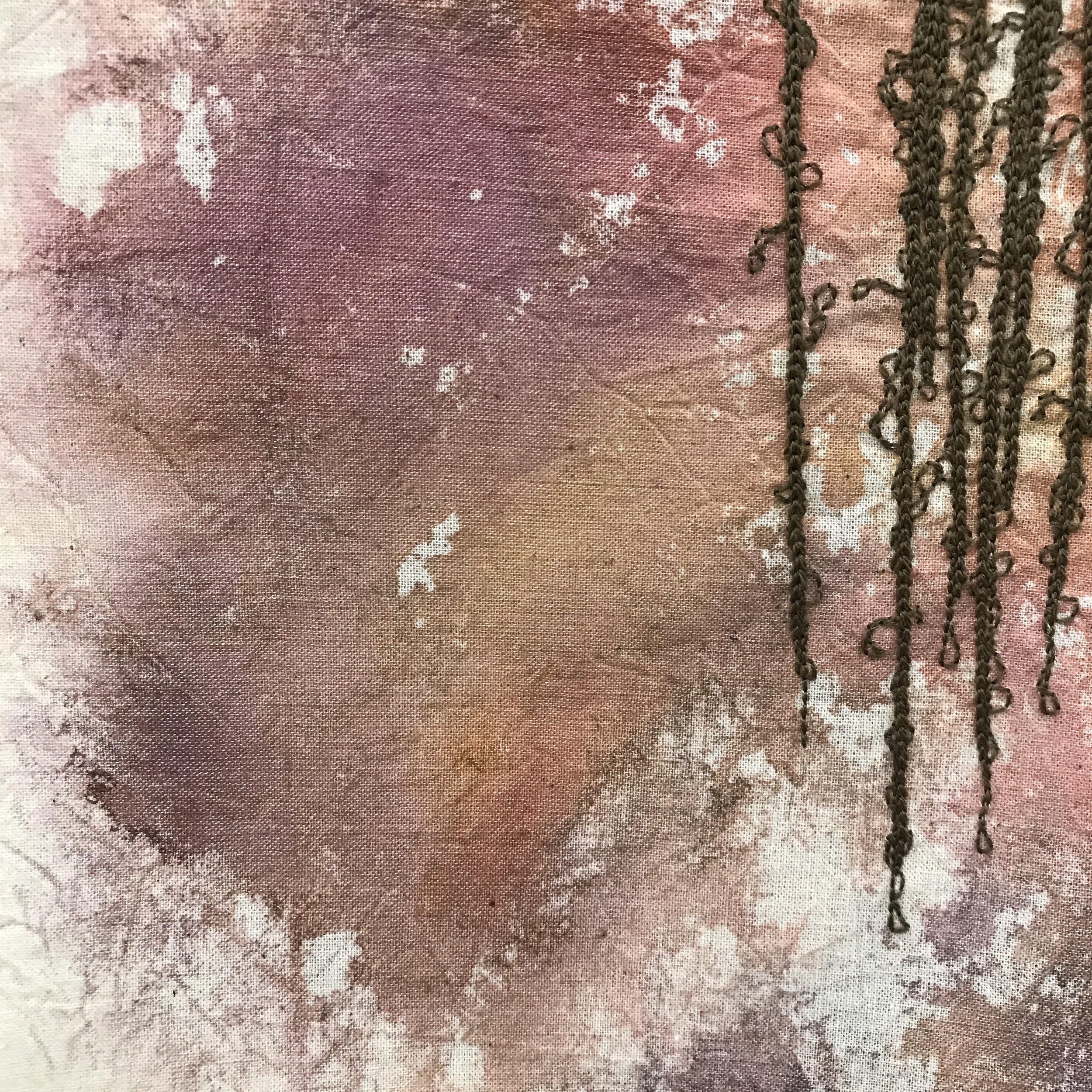
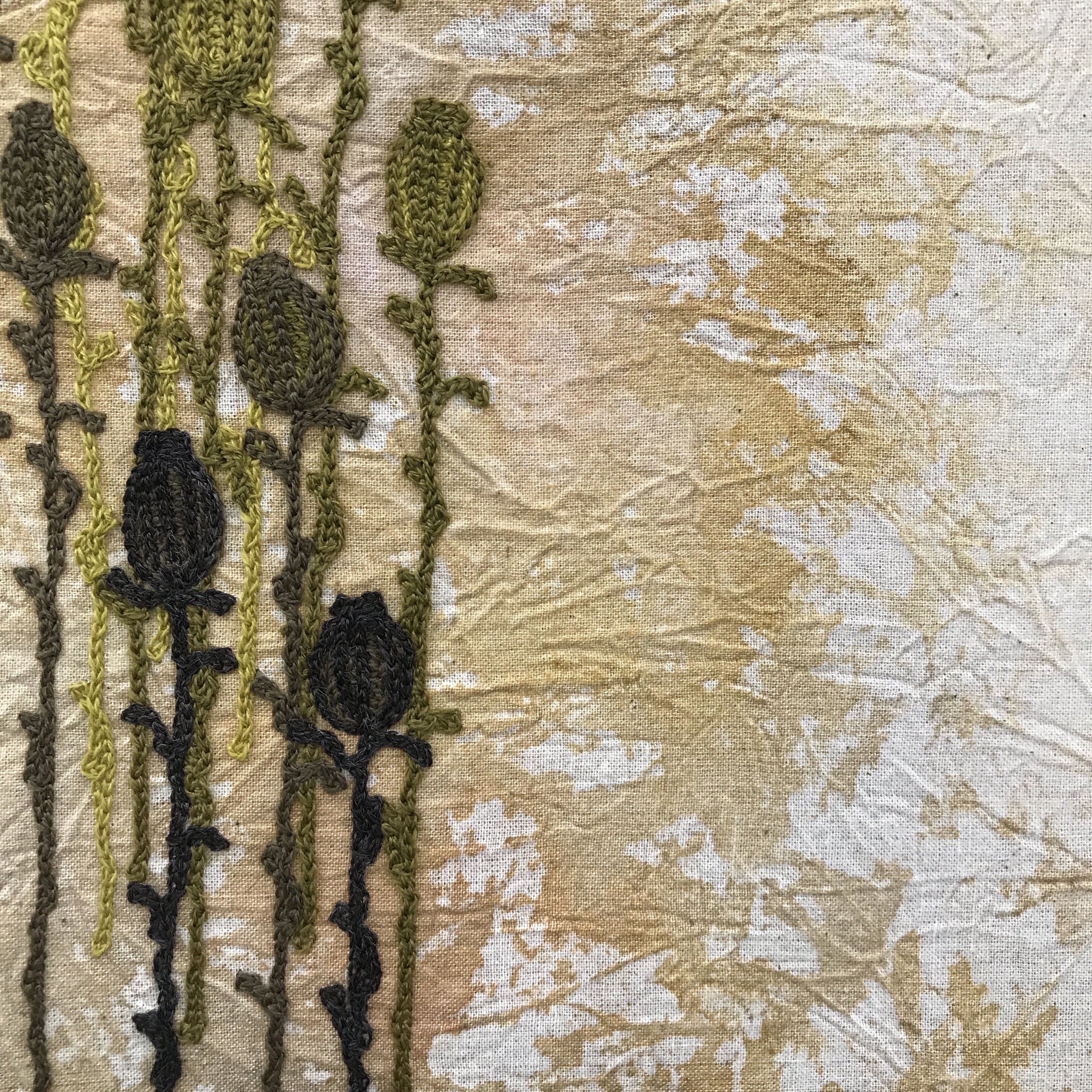
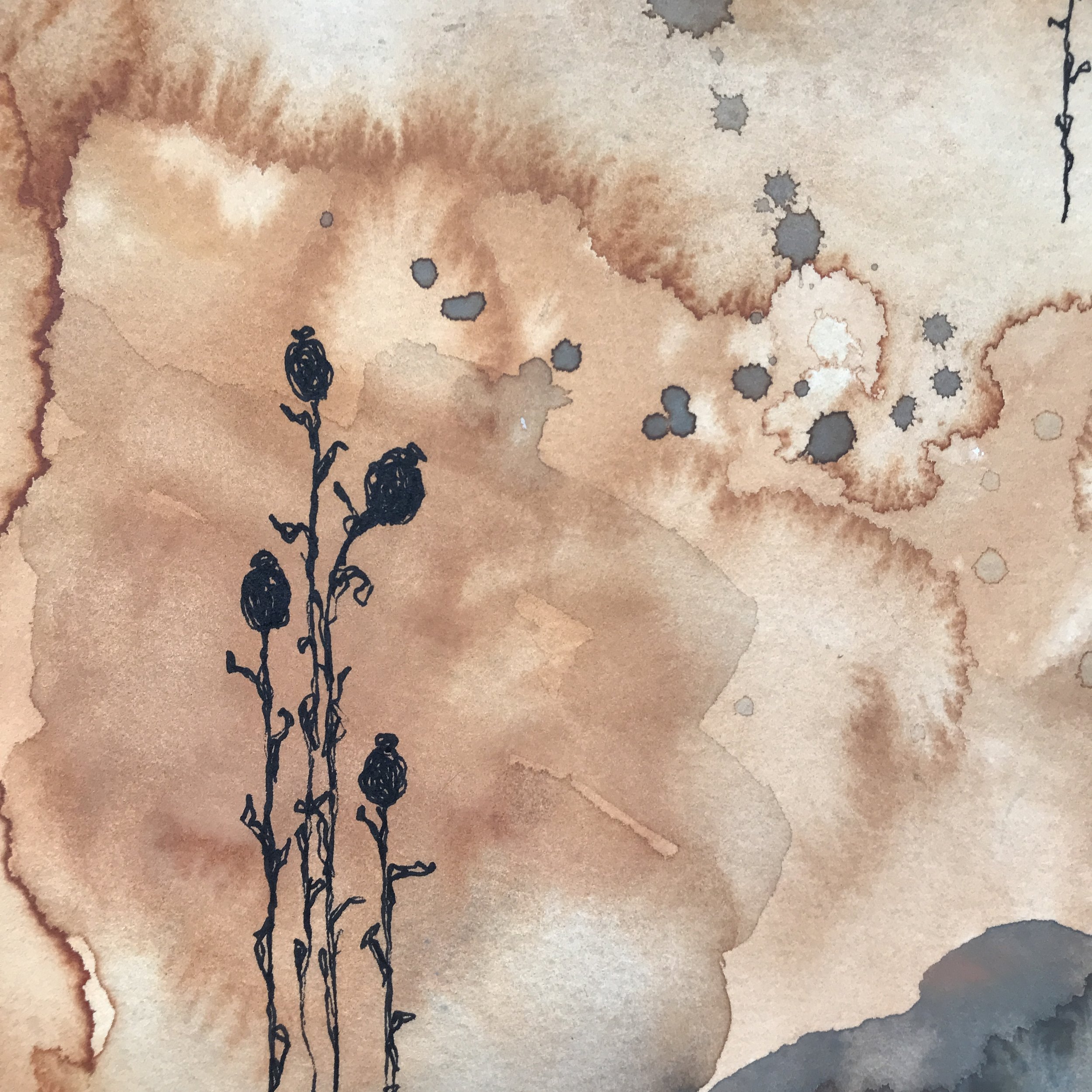
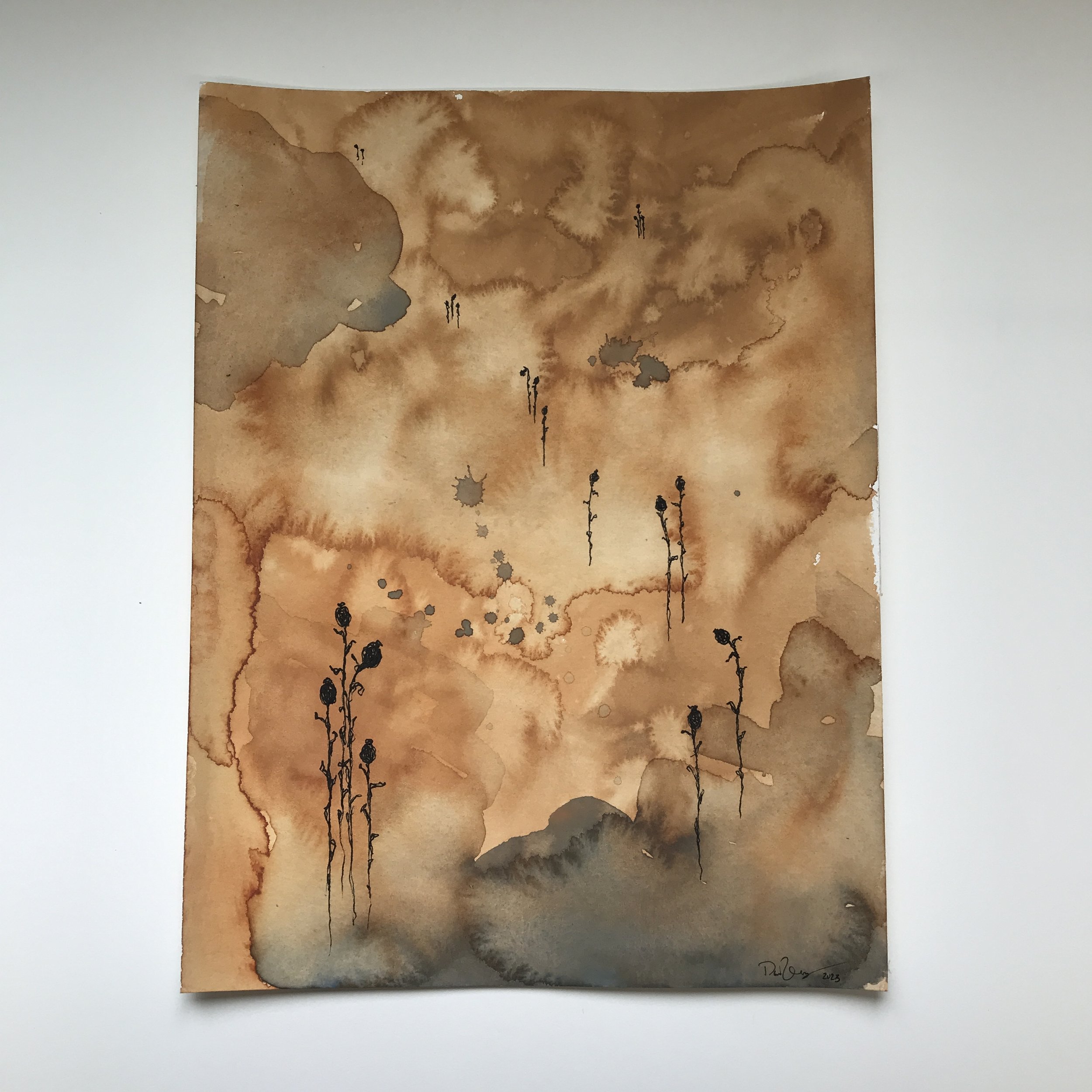
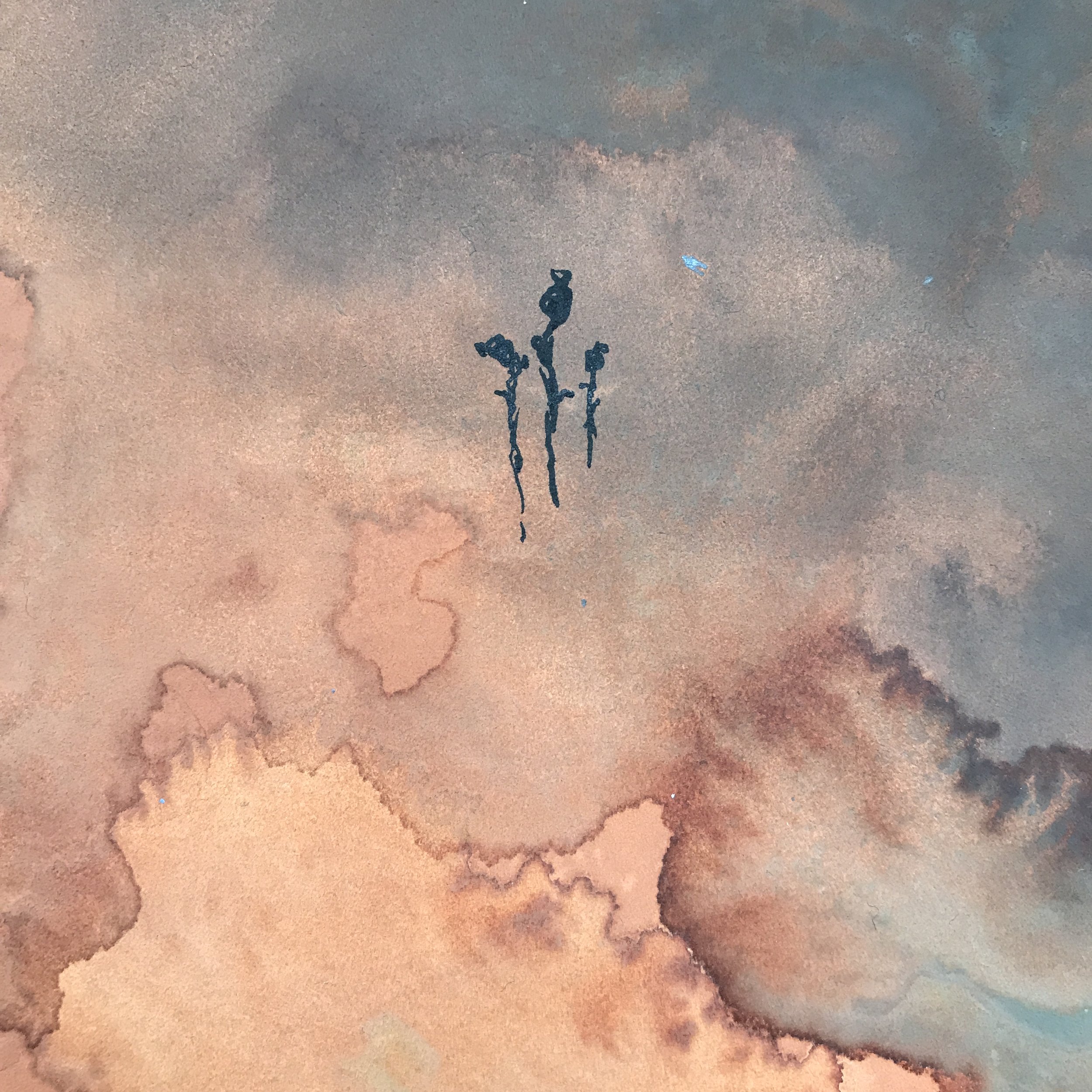
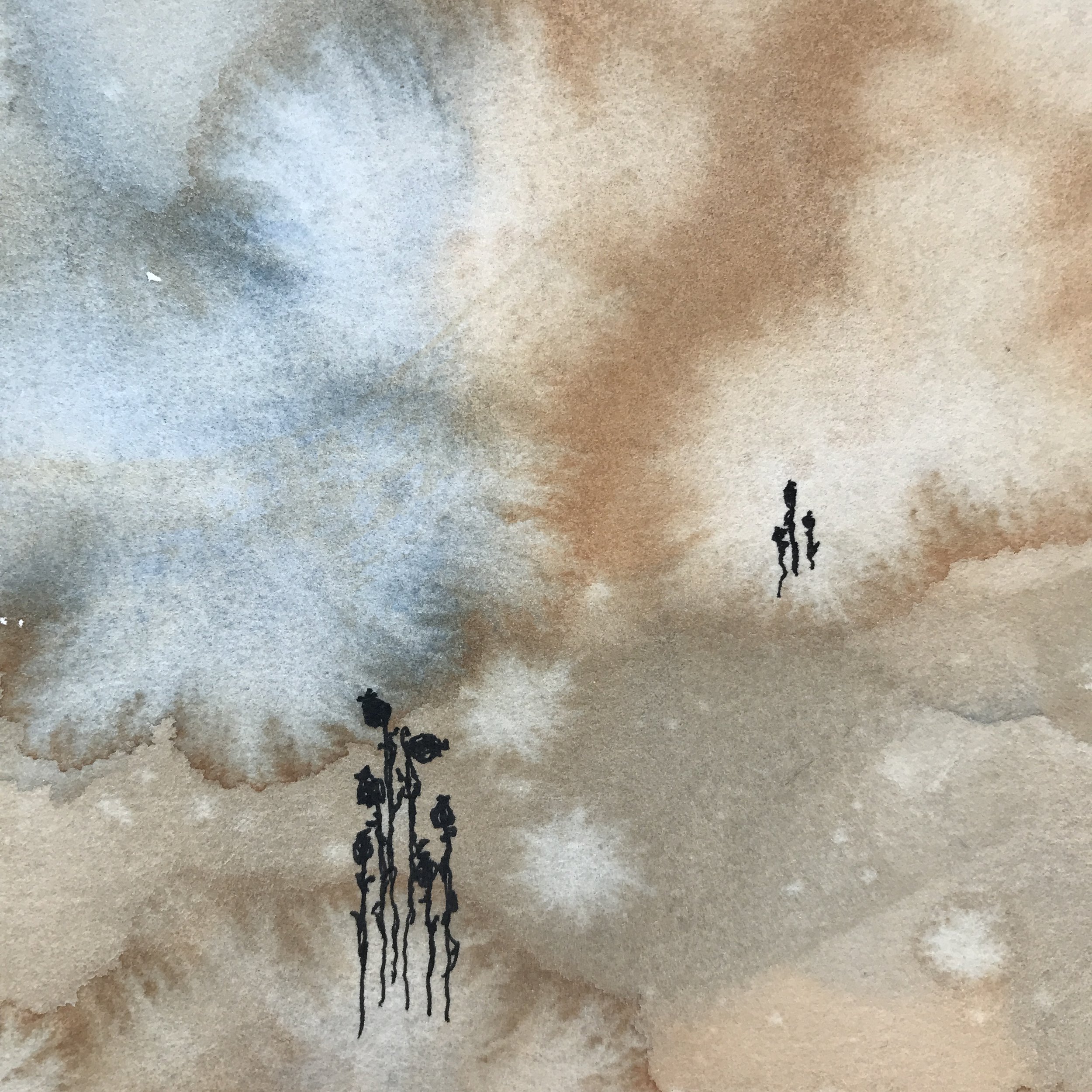
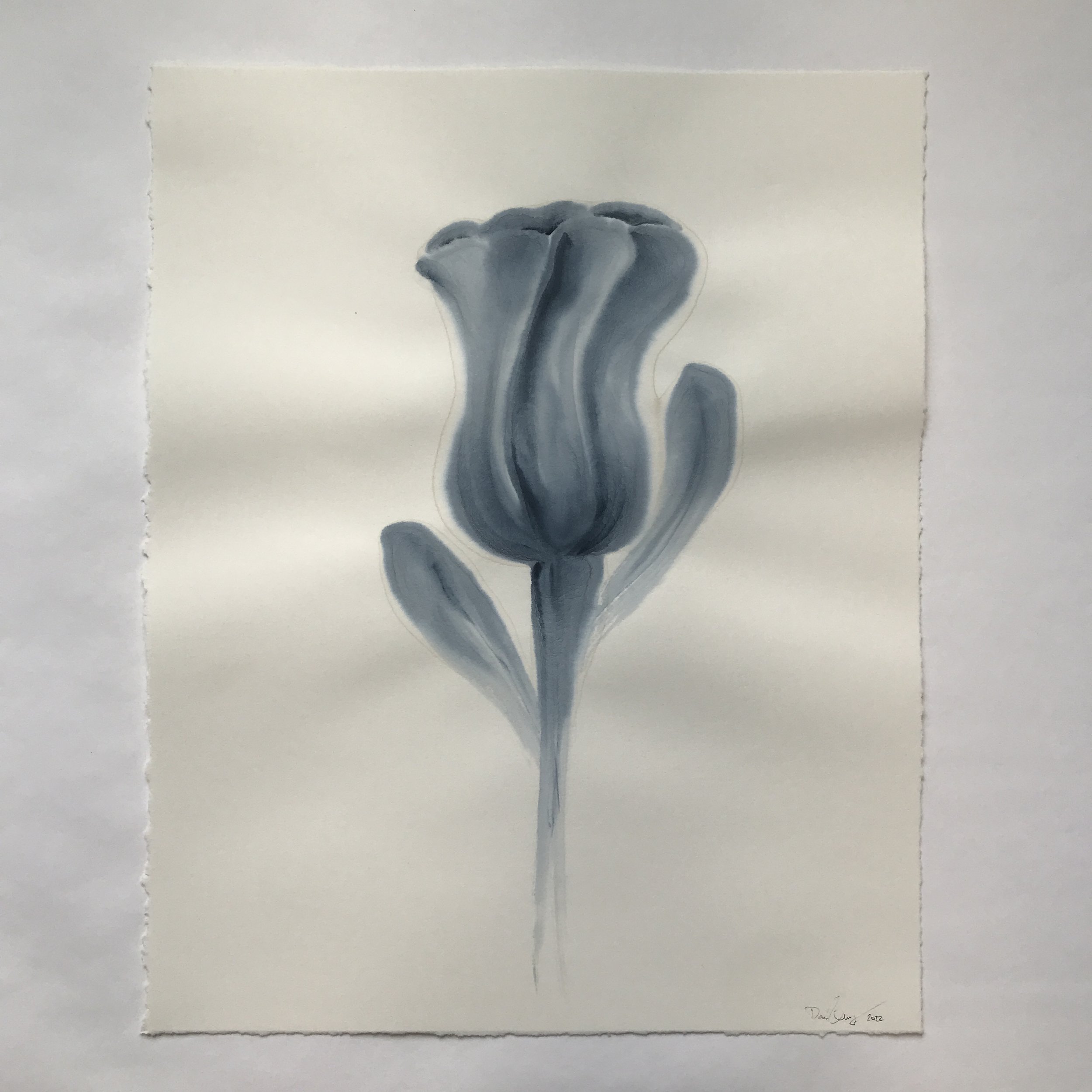
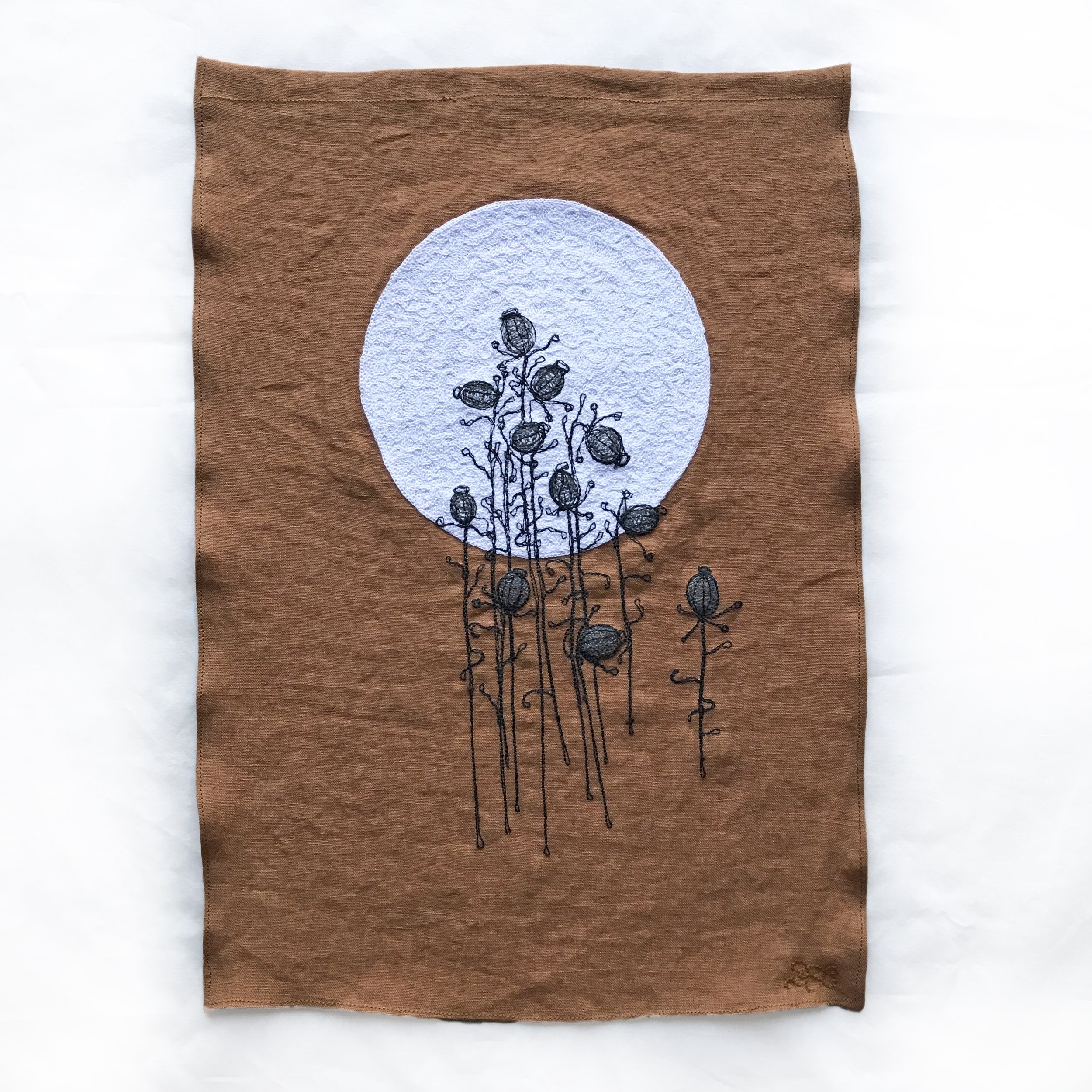
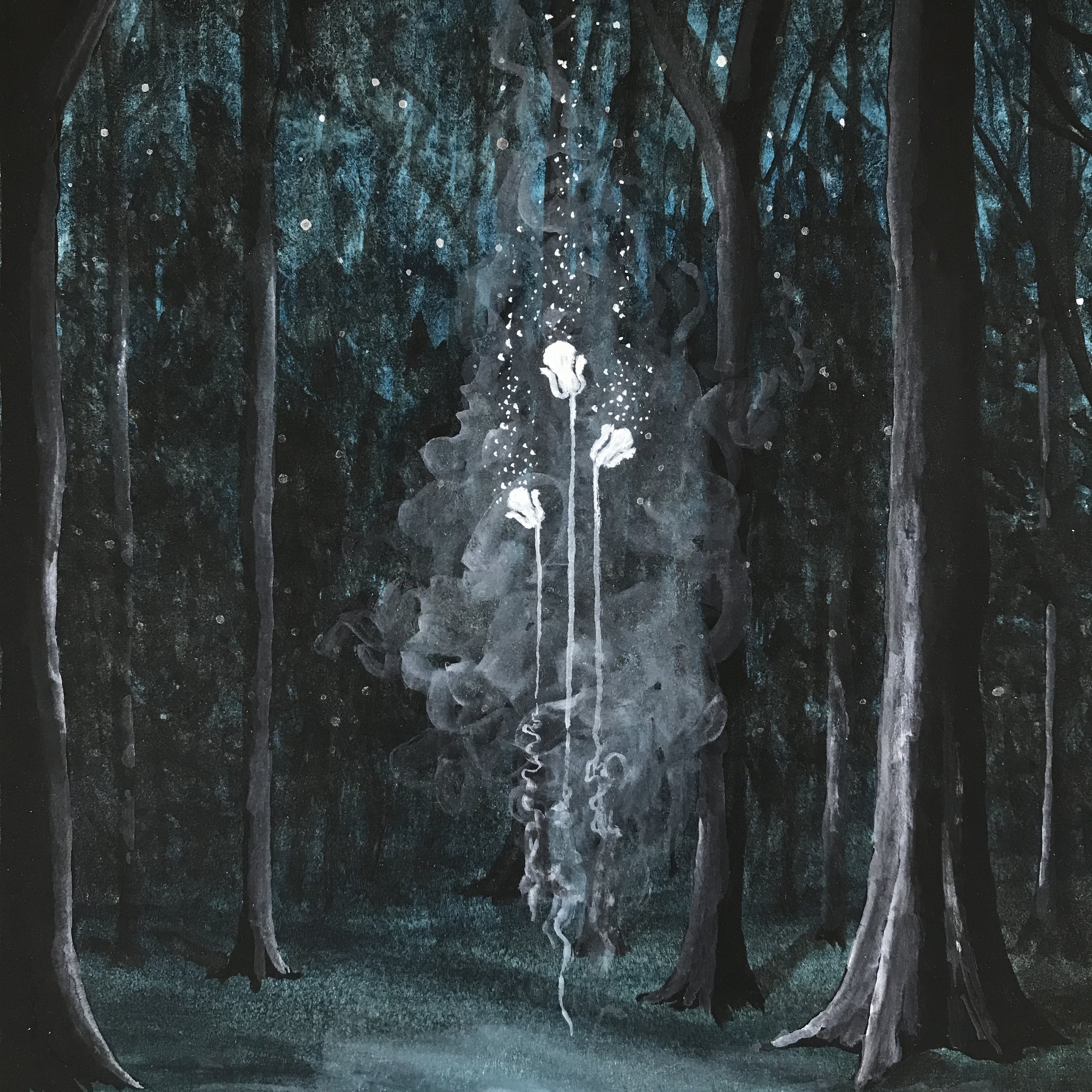
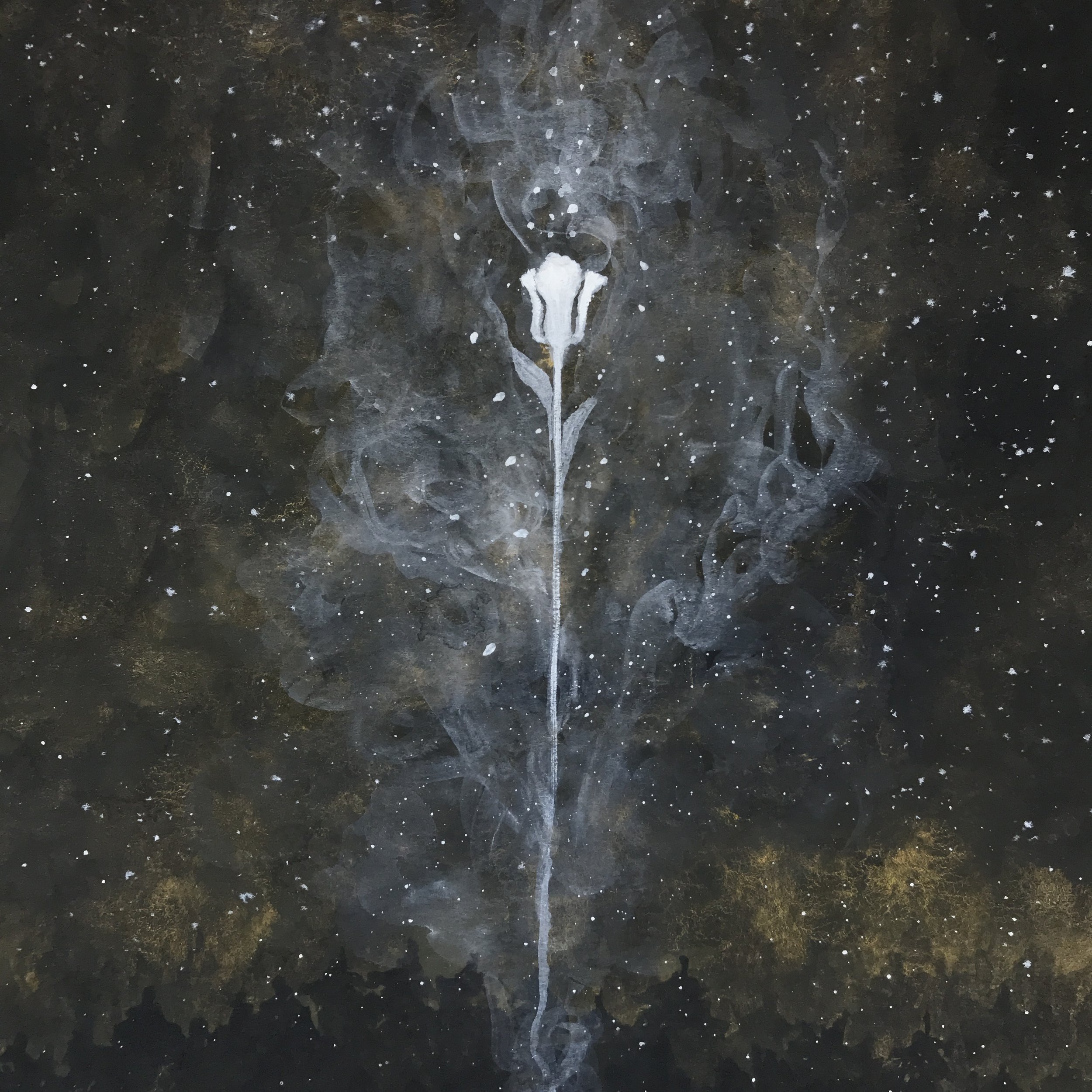
Here then is my wrestling with the realms. And here is the Ghost Pipe as my steadfast guide through the nebulous, terrible, gorgeous and fragile dance between life and death.
Then Come The Night

A Study of Fragile Species Threatened by a Wall
Originally displayed at the Marfa Book Company in Marfa TX during the Agave Festival, this is a series of six linocut prints based on endangered species in the Big Bend that will be harmed by the construction of a border wall between the US and Mexico.
Non-human animals, of course, do not live by our human codes of conduct but are becoming increasingly subject to them. The idea of constructing a border wall between the US and Mexico may be controversial in the human scope, but in the natural world it seems it can only mean division and disruption, and therefore destruction. In my time living in West Texas I’ve seen the changes even a crude fence can cause in this delicate and fragile landscape. The existence of a border wall and the construction of it will forever change this land and the species that have clung so fervently to life out here.
I dreamt this project up long ago when a border wall was first mentioned, but figured that by the time I was able to create and produce all of the prints necessary, the concept of a border wall would be a distant and ridiculous memory for us all. As the controversy continued I thought maybe I’d get to work. It’s sort of horrifying to think that now, after all this time working on these prints I assumed would be insignificant upon completion, the wall is closer to being built than ever.
There are many species, many more than I have carved of course, that will be harmed by a wall. I have chosen these particular subjects due to their presence in The Big Bend and surrounding regions, their current “endangered” or “threatened” status, my creative intrigue in carving their likeness, and their having of eyeballs from which I could carve “star strings” (so many beautiful cacti left out).

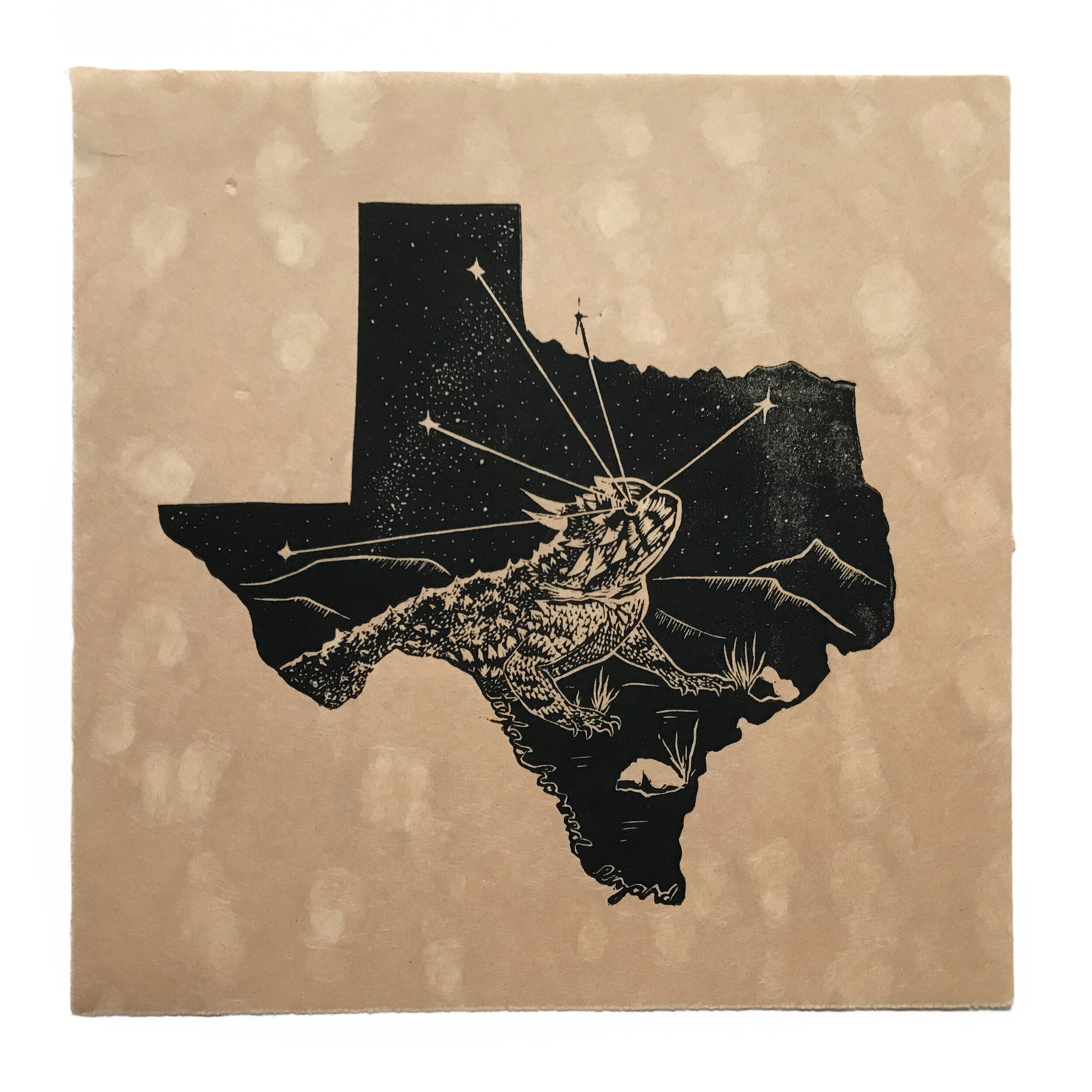


In everything I create I hope to strengthen the connection between humans and nature, as I see it to be one of our most important relationships. With this project in particular I hope to bring a bit of light to the creatures we have left in the dark.
National Park Tour
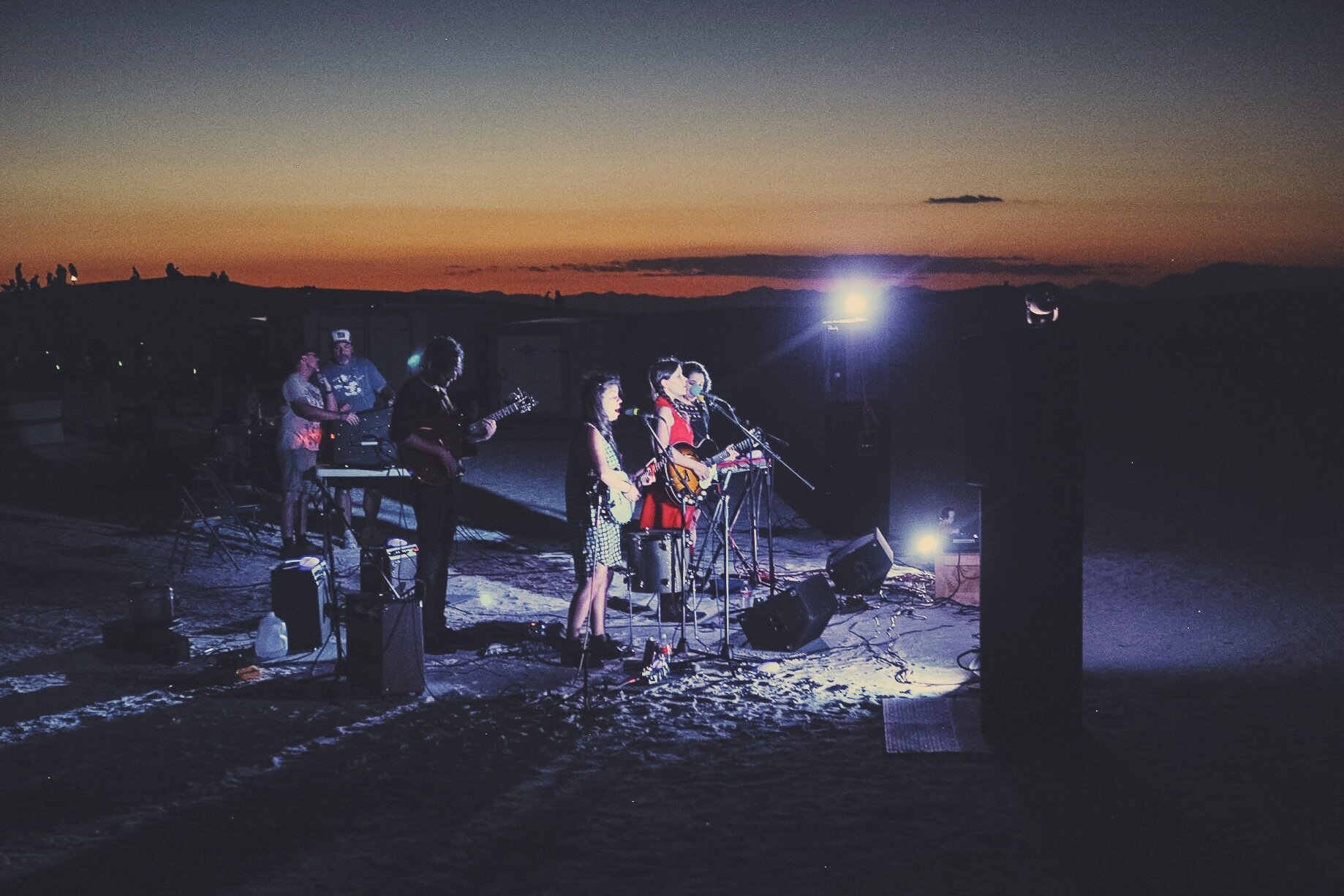
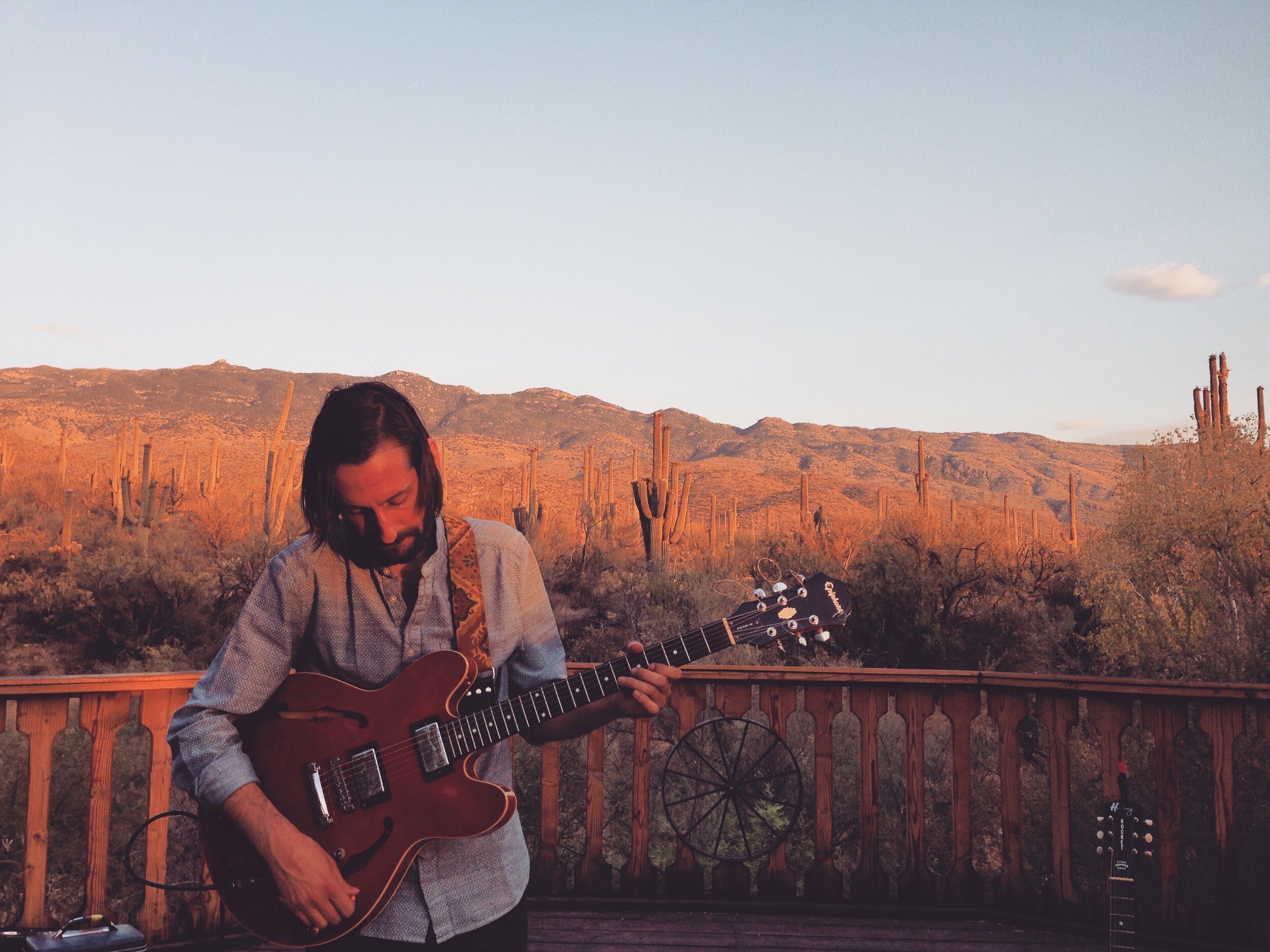
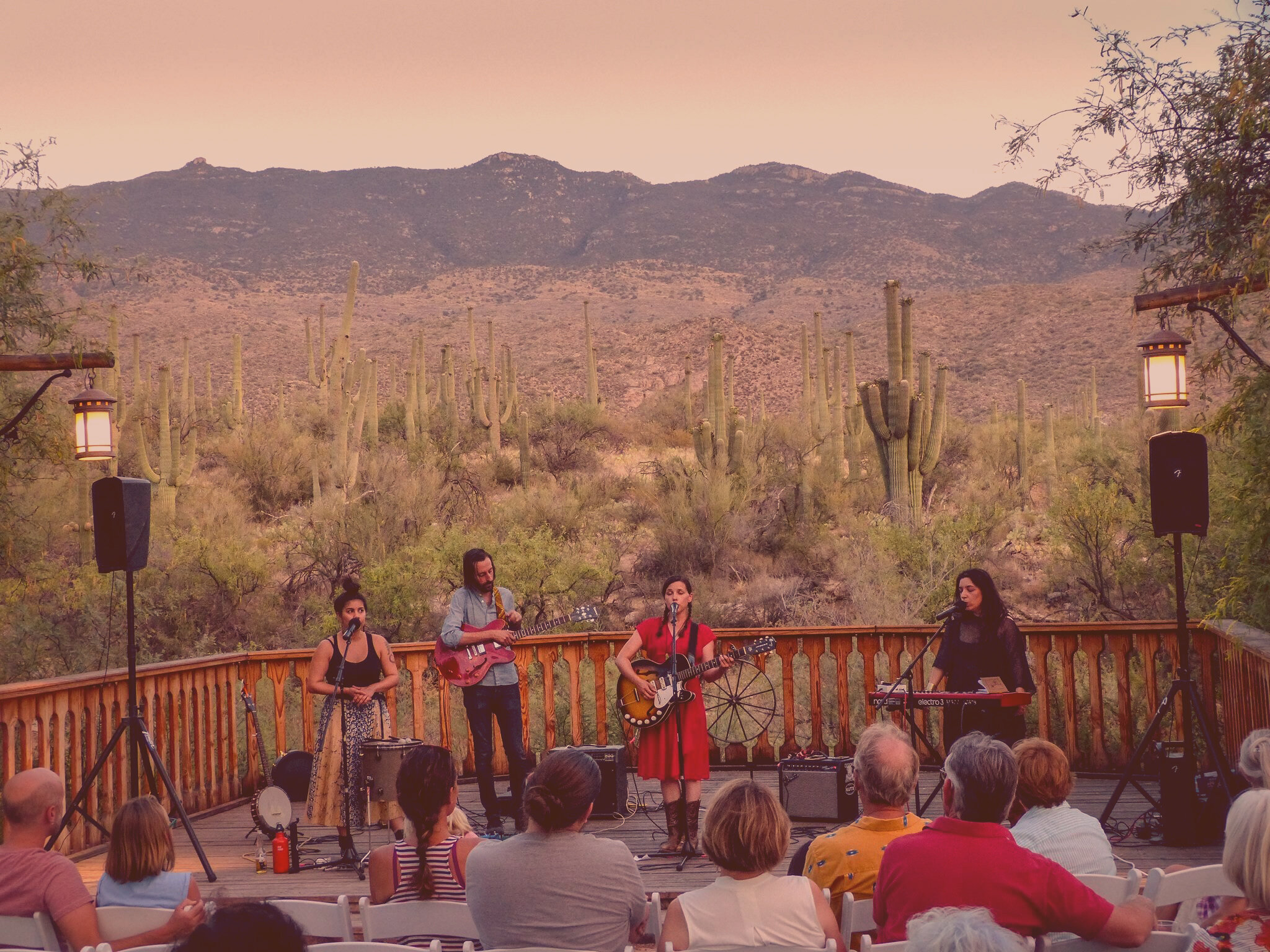
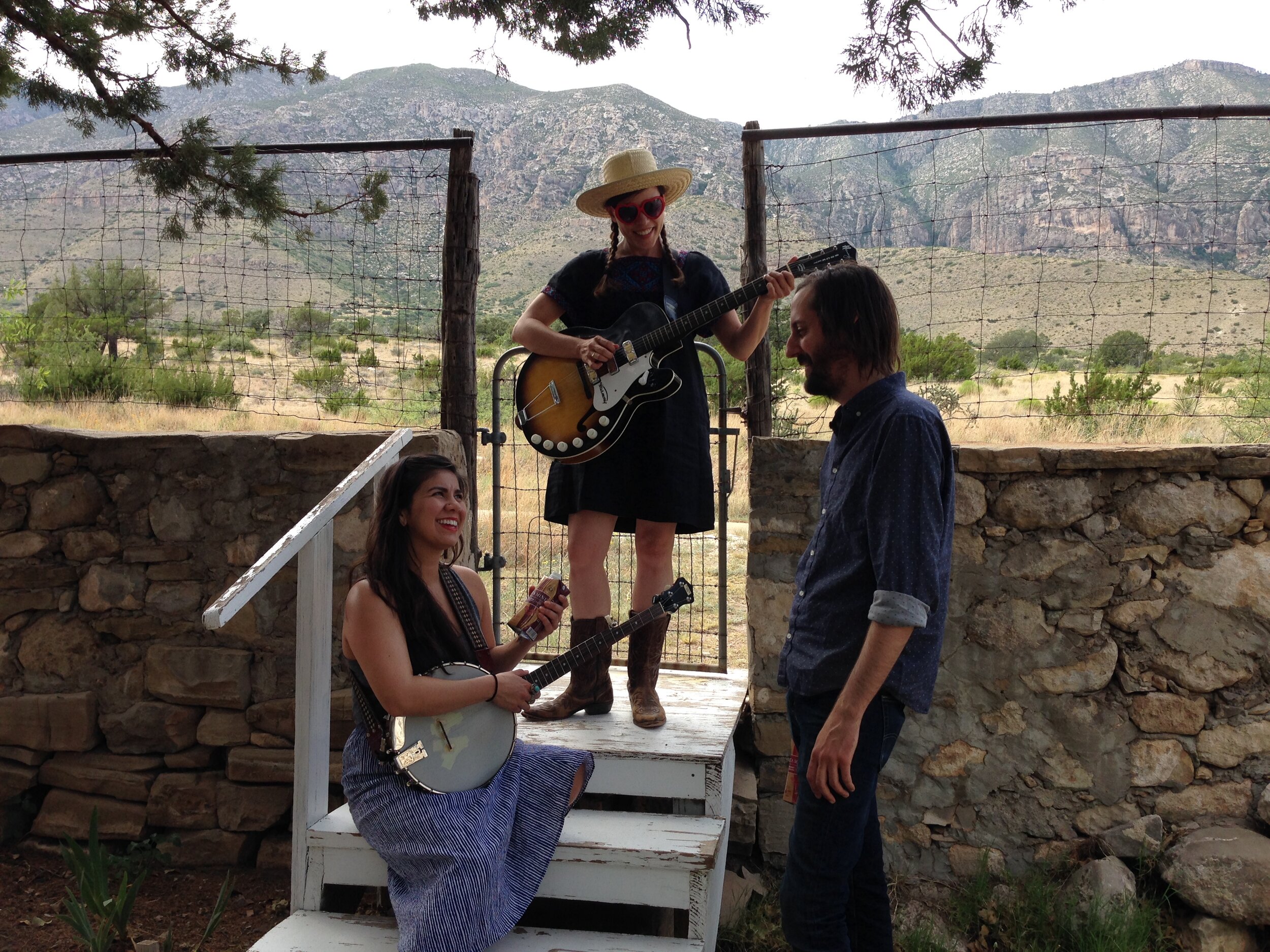
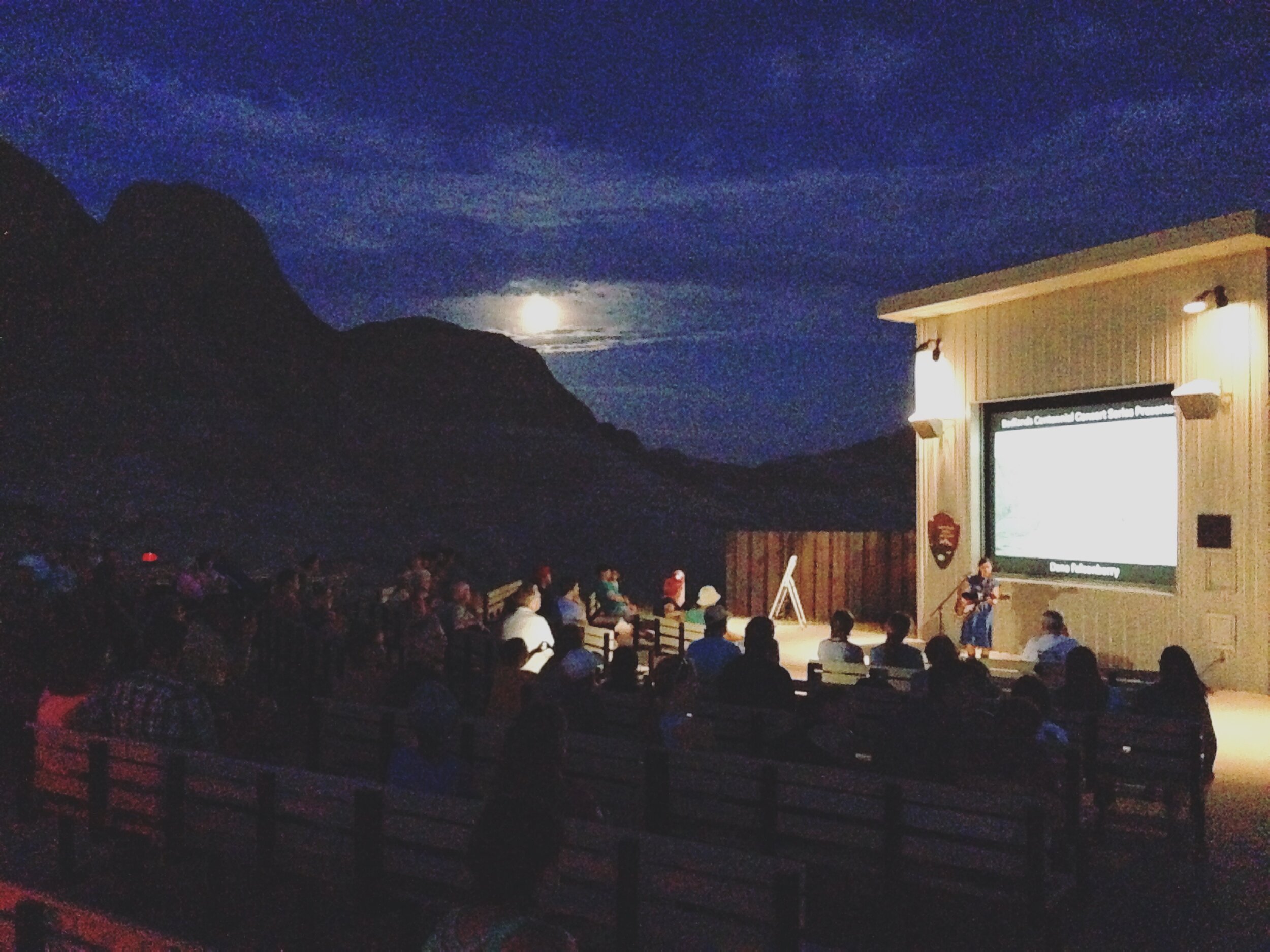
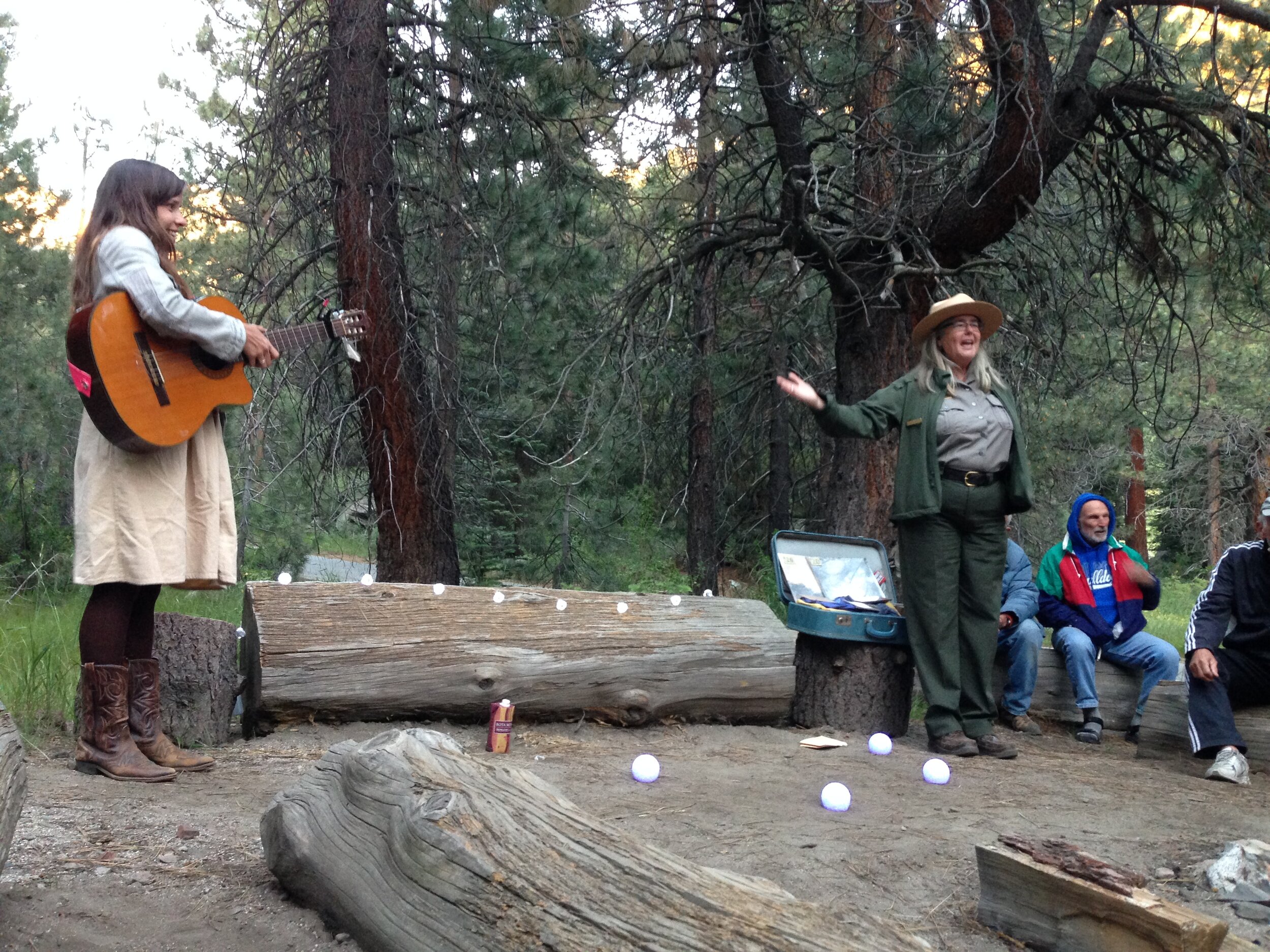
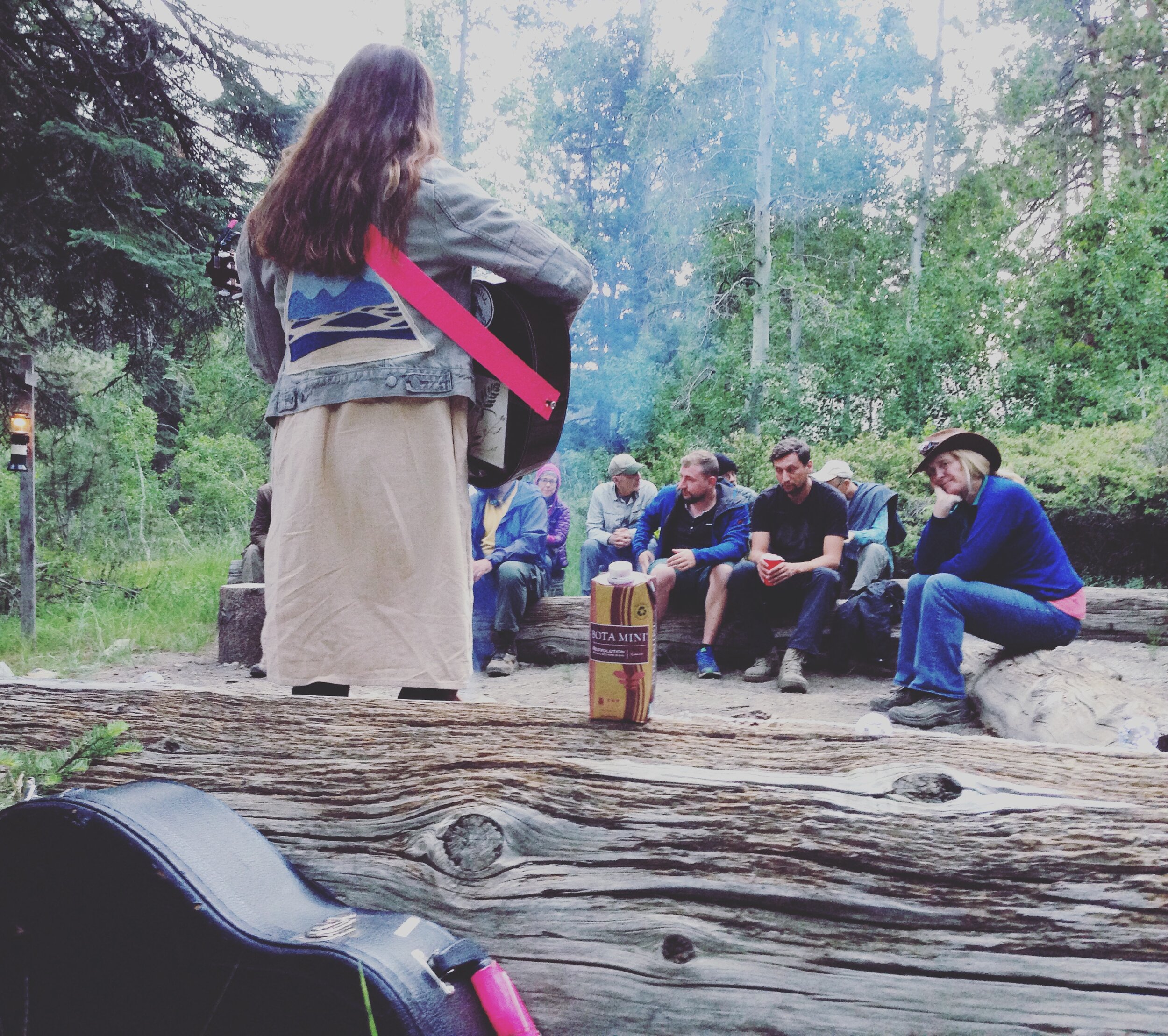
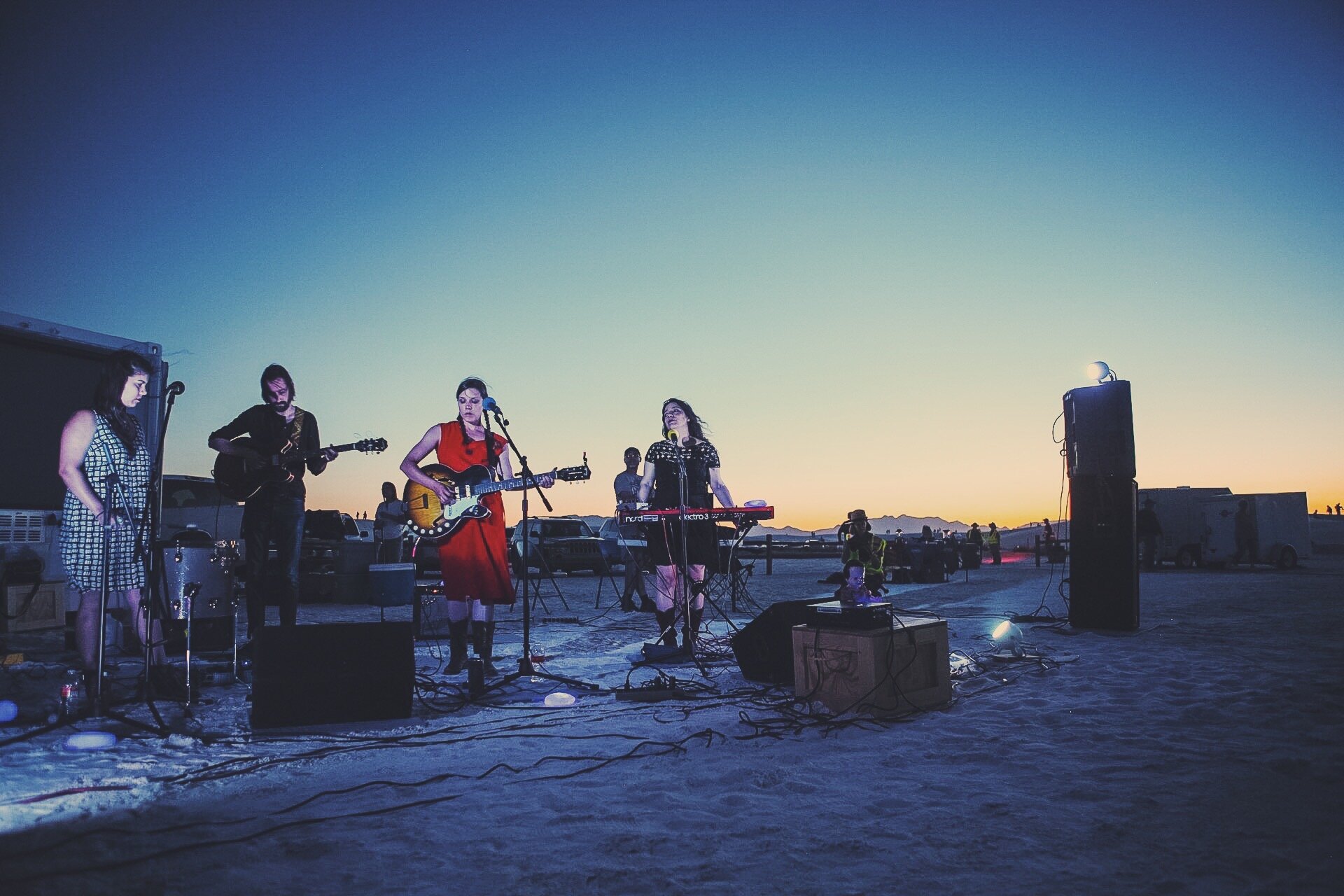
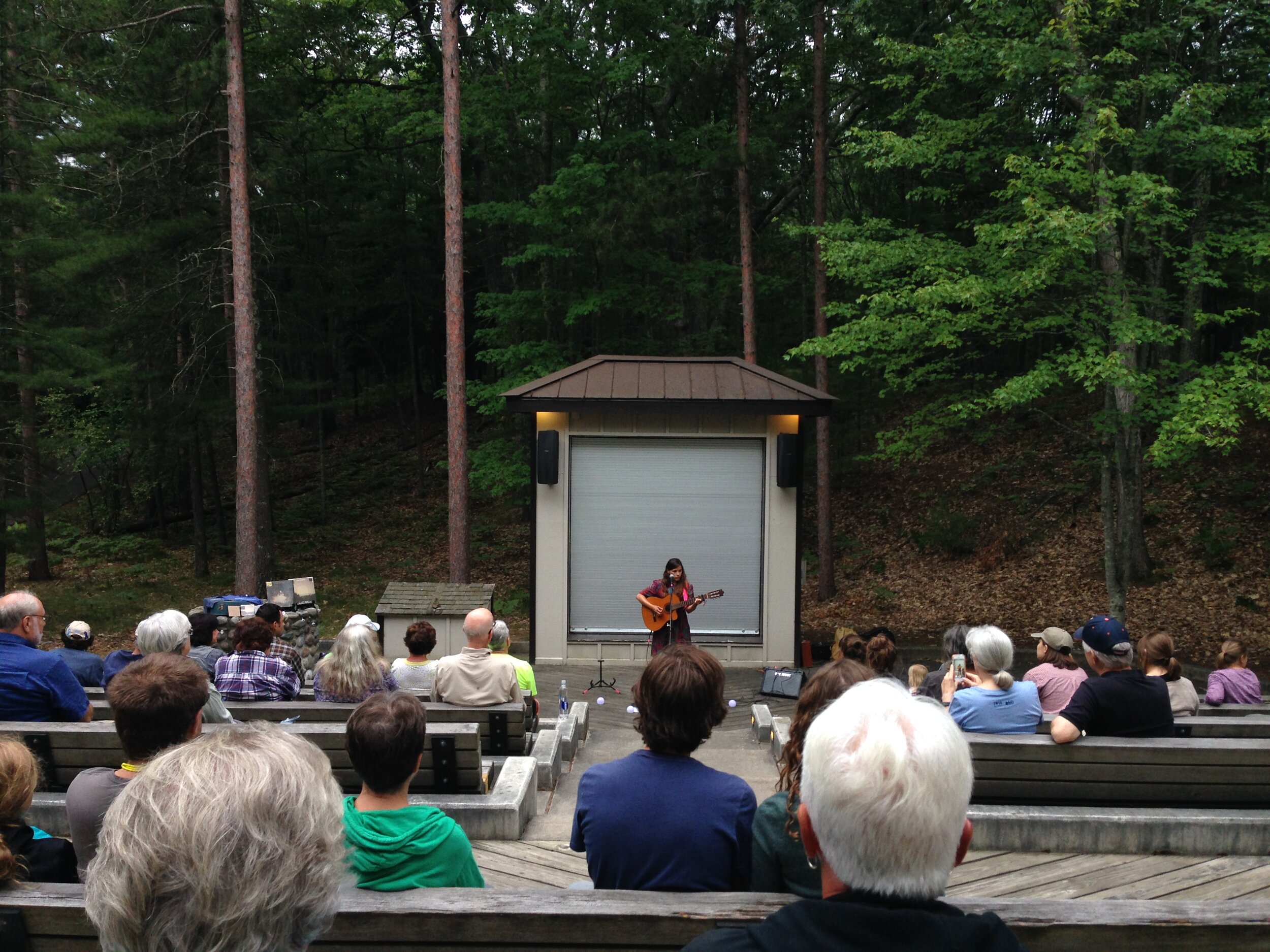
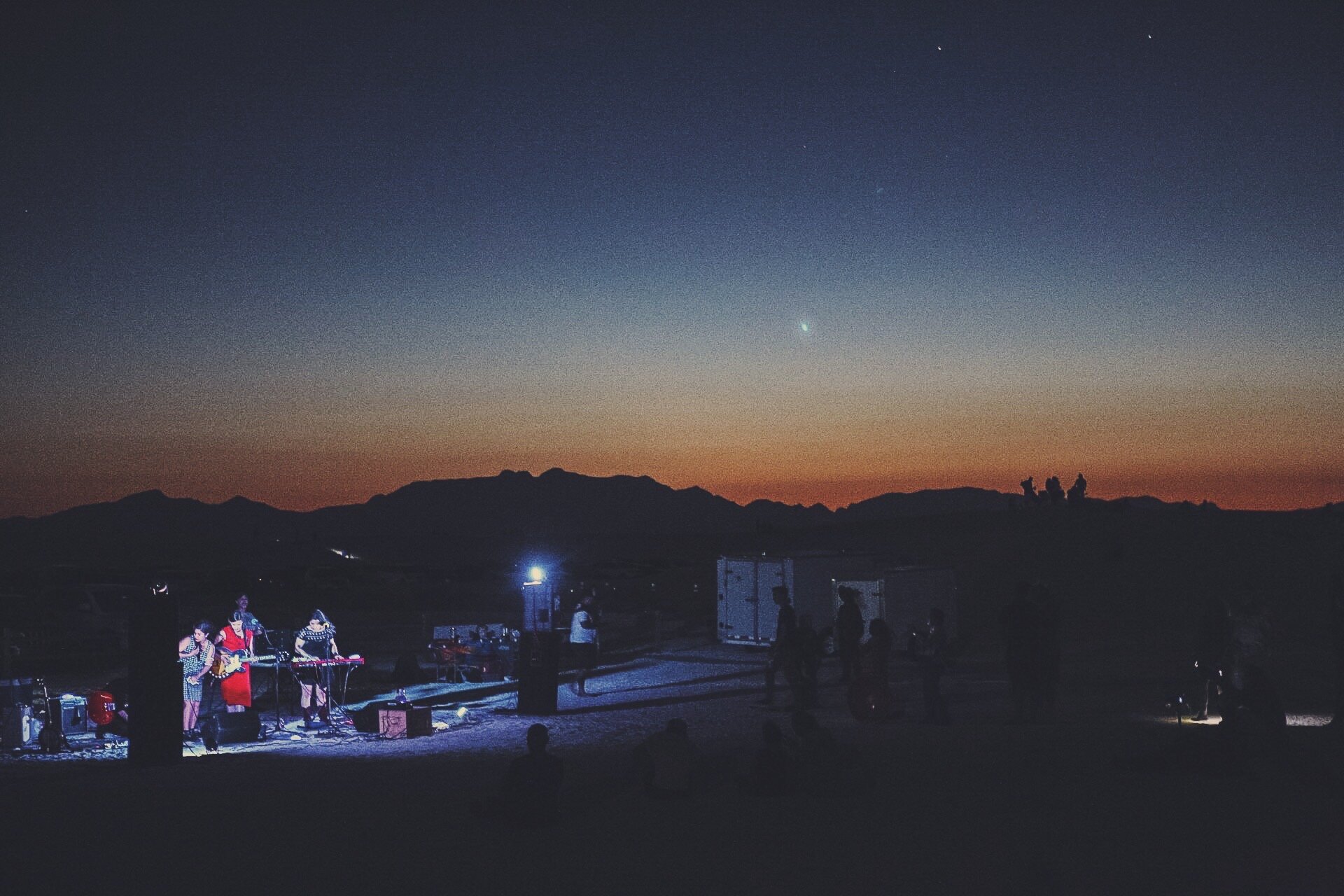
For the release of my last full-length studio album, From the Forest Came the Fire, I decided to forego the traditional club and bar circuit for the release tour, instead opting for the gorgeous natural venues of our National Parks.